Judith Johnson
  • Blog
  • About me
  • Poetry
  • Miscellanea
  • Travels
  • Projects
  • SWM Extra
  • Pen Portraits
  • Contact/To Buy

My Fantastic Five - Books I Love #2: Paul Cornish

7/12/2018

1 Comment

 
Picture
When my favourite item in the Waitrose Weekend paper (My Best Books) was chopped to just one book a week from five, I really missed it - I just love to hear what other people rate their cherished reads, so I decided to start my own guest-blog along the same lines. Here is the second, with thanks to Paul Cornish, who writes:

I graduated with an illustration degree and went on to work in a variety of  historical sites, art galleries, museums, art/print companies,  always keeping the love of art and books at my core. I've now been working as a Library Customer Service Officer and Registrar of Births and Deaths for a few years. I love being able to talk ‘books’ with people and encourage others of all ages to read (including my three year old son). Being an avid reader, I'm now surrounded by books of all kinds on a daily basis. Was this career move just so I could get my fix without any effort?! It’s a possibility.
 
My fantastic five are: 

Picture
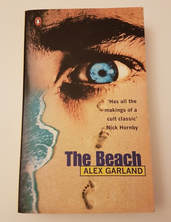
The Beach
by Alex Garland
​
Growing up I used to love being read books, especially at bed time, by my mother but never really enjoyed the idea of reading them myself. It seemed like too much to take on. I didn’t discover how a person could enjoy being completely immersed in a fictional world until I was about 18 years old when I was given Alex Garland's ‘The Beach’. This beautiful yet brutal story seemed to grab my attention and appeal to my young self as I was transitioning into manhood, on the cusp of discovering a solitary freedom and independence in a world that can hold so much possibility yet so many hidden dangers.
Picture
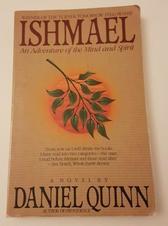
Ishmael
by Daniel Quinn
​
After a year living abroad and while returning to England I began to read this on the plane. I continued to read it hungrily once back home. I can honestly say that this book permanently changed my view of the world and culture we live in. After finishing it I remember feeling almost desperate to do something about the selfish and devastating way we're blindly stripping this planet in order to feed our rapidly growing population. Quinn’s powerful message is carried across perfectly on the fictional story of a character who becomes the pupil of... a gorilla. 
Picture
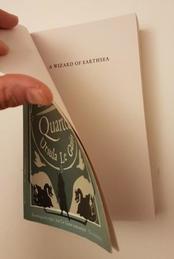
A Wizard of Earthsea
by Ursula Le Guin
​
Quite a few books have been recommended or given to me by my oldest friend Tom, but this one ended up being by far my favourite. It’s the first story of the Earthsea Quartet and it follows the first part of Ged's life. A boy with a considerable gift in magic who struggles with himself to become the man he wants to be (or is destined to be). Beautifully composed, I believe Le Guin's writing is inspired by various anthropological and theological studies which allowed me to connect to Ged's character and the world he lives in on a more personal and spiritual level. 
Picture
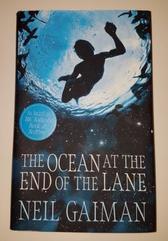
The Ocean at the End of the Lane
by Neil Gaiman

This book was a birthday gift from my wife, and since reading it I have become a huge fan of Gaiman's writing. The main character of this book is a child living in a country village whose family is infiltrated by a character of increasing menace. He also befriends a very unusual little girl. It reminded me of my days walking in country lanes and fields and visiting friends in country cottages. Gaiman's ability to blur and skew the lines of reality in such simple ways had me very quickly falling in love with this story.
Picture
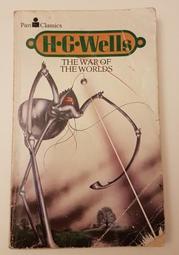
War of the Worlds
by H G Wells

In my early 20’s, and never having read any of Wells's work before, I began to read this at a friend’s house and I later bought my own copy. At first I felt unused to the old fashioned language, but after the unearthly events started to unfold I was unable to stop reading. I was stunned at how a man writing this in the 1890’s could even imagine such terrifying and effective alien technologies. He seemed to show how fragile the human race was at a time when the British Empire was seemingly at its proudest. I was and still am truly awed.

1 Comment

Food in England by Dorothy Hartley

5/12/2018

2 Comments

 
Picture
It’s no secret I love books. When I worked at a girls’ boarding-school, the librarian would from time to time alert staff that old stock was being deleted, at which point I would beetle down The Long Corridor to the library, heart beating fast with pleasurable anticipation, and stagger back with armfuls of weighty tomes. Food in England, published in 1954, was one such - 662 jam-packed pages of fascinating historical details collected by an eccentric Englishwoman, Dorothy Hartley, who died  aged 92 at the house in Froncysylltau she inherited from her Welsh mother, after a lifetime collecting and recording old customs. She trained as an artist, taught art, worked as a journalist and wrote on social history among other things. In 2012, Lucy Worsley made a film exploring her life-story (see link below).  

Food in England is a treasure-chest of marvellous, personally-researched and idiosyncratically-ordered recipes, old customs, ways of growing food, etc, and I consumed it at the rate of a page or two a night - slow reading, if you like. I’ve usually got a selection of books going at any time - a novel, a non-fiction, a spiritual readings book, and, the last year or so, a vintage Ladybird book - a four-course meal for bookworms! 

​Here’s  a baker's dozen of fascinating tasters from the book which might tempt you to acquire a copy. The beautiful illustrations are by Miss Hartley herself (a fact I was unaware of until I finished the book and researched the author - among my jotted reading notes I find the indignant remark - ‘artist not credited!’).

  • The history of white bread, and the pre-Reformation belief in the power of consecrated bread.
  • Thumb bread ... the American word "piecing" for a snack taken in the hand, has been preserved since it left England with the Pilgrim Fathers. In Yorkshire they still speak of a "piece poke" for a dinner bag.
  • Recipe for 18th century Coconut Bread and for Famine Bread (from Markham, ingredients including Sarrasins corne , or Saracen's Corn).
  • Description, from sixteenth century journal, of a sea-voyage when the sailors came upon a fifty year old gibbet, used to hang mutineers, from which their cooper made drinking tankards for those "as would drink in them".
  • Description of the Welsh pig: “... this old-fashioned, peaceable, capable, thrifty, neat little porker ... has been kept by every Welsh miner, quarryman, and farmer, for centuries.”
  • Ox-rein for Clockmakers - the long testicle cord of the bull ... was hung from a hook with a heay weight to stretch it out. Its strong gut texture was used as pulleys in some sorts of grandfather clocks.
  • The famine years of the Middle Ages - ‘To realise how desperate was the famine you must know the seasons as the starving peasants knew them - close and vital knowledge.’
  • A recipe for Mediaeval Chewing-Gum (or chewing wax) using beeswax, honey, ginger and cinnamon
  • The middle-class Victorian household 1800-1900 section includes mention of brisk exercise before breakfast, which brought to mind the old ladies I met when I was alumni officer at the boarding-school where Enid Blyton's daughters were educated. Girls in the 1920s and 1930s were required to run to the village and back (3 miles!) before breakfast every day.
  • The Hafod, or summer farm in early times, common to all mountain countries (now no longer practised in Wales, sadly)
  • The old Welsh dog power churn wheel ("It is no hardship, the dogs turn up their job as gladly as their fellows turn up for their job with the sheep").
  • The Queen's Cheese recipe (1600), to be made between Michaelmas and Allhallowtide, and a huge cheese, nine feet in circumference, made in 1841 for Queen Victoria from one milking of 737 cows.
  • Last but not least, for fellow diehard fans of Patrick O'Brian's Aubrey and Maturin novels - the recipe for soup squares, surely Dr Maturin's portable soup!

​I look forward to foraging in second-hand bookshops for her other works - Life & Work of the People of England (6 volumes) sounds right up my street.
 
Link to clips from a BBC film made by Lucy Worsley:

https://www.bbc.co.uk/programmes/p010fsbq

2 Comments

My Fantastic Five - Books I Love #1: Sara Browne

20/11/2018

5 Comments

 
When my favourite item in the Waitrose Weekend paper (My Best Books) was chopped to just one book a week from five, I really missed it - I just love to hear what other people rate their cherished reads, so I decided to start my own guest-blog. Many thanks to Sara Browne for agreeing to be my pioneer!
Picture


Sara trained at CSSD and was an actor for many years before changing career in her fifties to become a lecturer in Early Years and education. She currently works for Beanstalk, a children’s reading charity, training volunteers to turn children who struggle with reading into passionate bookworms.

Here are her fantastic five:
​ 


Picture
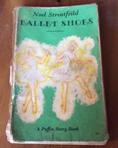
​Ballet Shoes by Noel Streatfield
​
I paid 3d for this at the village fete when I was 7. I have read it dozens of times. Who did I want to be? It was either Posy, because she danced so brilliantly, or Pauline because she was beautiful and got to do theatre and eventually the movies. Nowadays I fully appreciate the efforts Narnie made to hold the family together, but I don’t want to be her. Maybe I could be Petrova and fly planes; maybe I should read it again and find out.

Picture

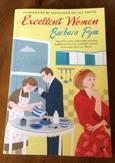
​Excellent Women
by Barbara Pym
​
This was the first of her novels that I read, tempted by the statement that she was “underrated” and “neglected”. She works on a very small canvas: mid C20 Middle England, academia, the church, awkward romances. It’s a safe, Pinewood Studios world, but not without depth and wit. I have laughed out loud at some moments and characters.

Picture
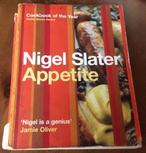
​Appetite by Nigel Slater
​
I had an occasional email correspondence with Nigel Slater before he got swallowed up by Twitter. I once told him that I read this book of his from cover to cover, as though it was a novel, and he was delighted. It is almost twenty years old now, and he will admit that food tastes and fashions move on, but he consistently reeks of warmth and pleasure and variety. Keeping Smarties in the basic store cupboard is just one of his strokes of genius.

Picture

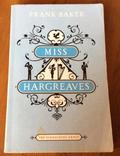
​Miss Hargreaves
by Frank Baker
​
A dear friend sent me this. It is bizarre, surreal and enchanting. The protagonists set up a situation for a joke and then tie themselves in knots trying to justify and then reverse it. The suspension of disbelief is key here. I believe in Miss Hargreaves, but like Norman and Henry, I don’t have any rationale. Enormous fun.

Picture

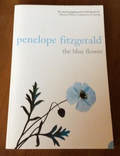
The Blue Flower by Penelope Fitzgerald

I loved this book so much when I first read it that I saved reading it again for a time when I could pay it fullest attention. It is very romantic, so brilliantly evocative and so clean and spare in style. I send copies to people all the time, sharing the joy.

5 Comments

A War in Words

17/11/2018

0 Comments

 
Picture
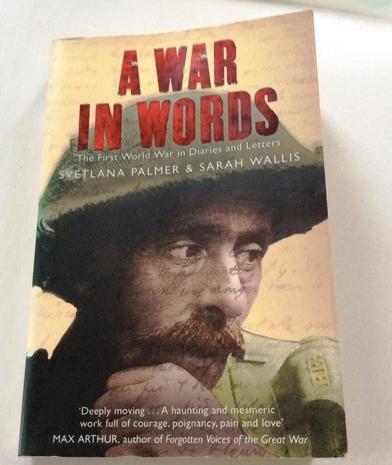
Having read quite widely on the First World War, I found much to reflect on in Svetlana Palmer and Sarah Wallis's collection of extracts from diaries and letters, written by those on opposing sides of the conflict, and accompanied by a useful connecting narrative from its authors. It makes for deeply moving reading, and shows,  if anyone ever doubted it, what an appalling waste of life and resources war is, and that regardless of who is blamed for the initiation of war, opposing military combatants, civilians, creatures and the earth itself suffer equally. 

One of the many insights offered by these personal writings are the preconceptions of The Other - and how they affect the writer's thinking and actions.

Vasily Mishnin, on the Russian front line sector of the Eastern Front north of Warsaw, writes in January 1915: 

The Germans are putting their trench in order, and we can see them taking their mess tins to fetch water... This is our enemy? They look like good, normal people, they all want to live and yet here we are, gathered together to take each other's lives away.

German officer Ernst Nopper, stationed in Poland in 1915, writes of a Polish fortress town that has fallen to the German advance against Russian troops:

Inside the fort I was particularly surprised by how clean the barracks are, everything is scrubbed and bleached ... we are wrong to accuse the Russians of being sloppy and untidy all the time. In one of the areas abandoned we found several paintings wrapped in newspaper. I was very surprised to find they were of a rather high quality. We should really ask ourselves why we think so little of the Russians. But it is true that culture hasn't really got through to the ordinary people here, unlike in Germany.

His next entries go on to illustrate, in addition to seeing the Slavic peoples as somehow lower in worth than Germans, the deeply anti-Semitic views which were widely held in Germany and which were to contribute to the rise of Nazism just a few short years later.

French officer Paul Tuffrau fights in the Battle of Verdun, which I recall learning at school in the 1960s, 'bled France white' - the campaign, which, like the Somme, was designed to draw German forces into two large divided fronts. On 25 December 1916, by which time the battle has been going on for 300 days, with 352,800 German casualties, and 348,300 French, he writes:

At 6pm I leave in the dark and the rain to visit the A-33 trench area, which cannot be reached in daytime. Beaudoin, the officer commanding, tells me that around three o'clock the Fritz, 250 or 300 metres away, sang them Christmas carols in French, beautifully.

And in February, after two weeks on leave:

... the men's faces are contorted by the cold and exhaustion. Red-rimmed eyes, red noses, pale skin, blue ears, beards hung with icicles. Sweat freezes right away and looks like snow on the horses' backs and on the men's overcoats. Our shoes cannot grip on the frozen earth as we march.

Many confided their innermost thoughts to their diaries, which they took care to keep hidden, for obvious reasons.

Paul Tuffrau records a conversation with General Mangin, second in command at Verdun, when the former attempts, unsuccessfully, to secure leave for his men, who unlike the British, are only allowed one day of rest after each 24 days on the front line:

Then, with a brief salute, he went back into his well-heated private office where it's easy to avoid the reality and talk of the greater good. As for me, I was stunned by his extraordinary refusal to acknowledge the courage of the men ... That night, after hearing this 'heroic' pep-talk, I led my men along the tracks that were horribly muddy and slippery. Some of them were crying with exhaustion and rage.

Turkish officer Mehmed Fasih is stationed at Gallipoli, and writes, in November 1915:

A great chasm exists between the fellows who do all the fighting and those who merely talk about heroism and victory ... what a tragedy it will be if all men who are still fighting here have to die like their predecessors.  Just so that a handful of cowards can enjoy a taste of fame.

At 21 years of age, he writes that his hair and beard have grown grey already, and that his moustache is white.

The chapter In The Bush shows how the war extended, among other places, to Africa, where there was a renewed scramble by the European powers with already established colonies for territorial gains, and  subsequent huge damage to the people of the African nations caught up in the conflict. African porters and labourers were used by both sides, and an estimated 100,000 to 120,000 employed by the Germans and as many as 250,000 recruits on the British side perished from malnutrition, disease and accidents. A further 300,000 native East Africans died as a result of famine caused by war recruitment and requisitioning.  German settler Dr Ludwig Deppe, who provided medical support to the German forces, wrote, a year after the end of the war:

Behind us we have left destroyed fields, ransacked magazines, and, for the immediate future, starvation. We were no longer the agents of culture; our track was marked by death, plundering and evacuated villages.

The chapter on The War at Sea contains an account by Johannes Spiess, Watch Officer on U-boat U-9, of his, and the submarine's, first patrol mission in the North Sea, six weeks into the war, and the jubilation of the crew when they sunk three British light cruisers, two of which, HMS Cressy and Hogue, had gone to the rescue of the first, HMS Aboukir. Although I'm sure a British crew would have done more or less the same, (though earlier Royal Navy officers, and I'm referencing Patrick O'Brian's fictional Captain Jack Aubrey, would surely have regarded it as deeply unethical to attack a ship without any warning, from a hidden position) I found it quite shocking to read this, as the Chief Yeoman of Signals on the Aboukir, Alfred Assiter, is named on our local War Memorial, and less than a month later, the U-9 would sink HMS Hawke, on which two more men from my town perished. As a non-combatant, and one who, unlike my older relatives, has been fortunate enough not to have lived through a war, it is naturally in those moments when I make a personal connection that I feel the horror of war most keenly. I understand that there has been a big reaction to Peter Jackson's We Will Remember Them among young people, who have suddenly seen the soldiers as resembling those living now rather than flickering distant black and white history. 

Particularly moving are the diaries featured of two children - Yves Congar from Sedan, a town in north-eastern France, and Piete Kuhr from the East Prussian town of Schneidemuhl.

Yves' father is one of a number of men taken hostage to ensure the compliance of the town's population, and sent to Germany to work. Yves himself narrowly escapes detention, at 14, after having being reported calling the occupying Germans the 'Boche'.

Piete, initially patriotic, becomes disillusioned as time goes by, and writes, in February 1918:

I don't want any more soldiers to die. Millions are dead - and for what? For whose benefit? We must just make sure that there is never another war in the future. We must never again fall for the nonsense peddled by the older generation.

So, just a few extracts picked out from a superb anthology which I can highly recommend to those readers who, like myself, are not so much students of military history, but of humanity in times of war.


0 Comments

Land of My Fathers

13/10/2018

0 Comments

 
Picture
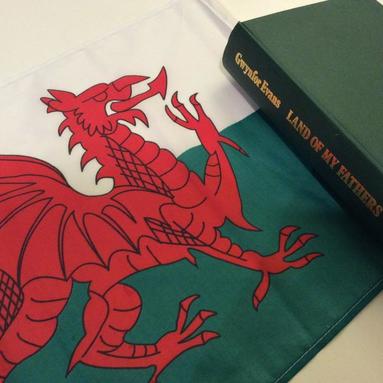
In our house are many bookshelves, and books waiting to be read, and included in these are ones that have waited patiently for many years. One of these was Land of My Fathers, the passionate and partisan overview by the late Gwynfor Evans of 2,000 years of Welsh history. This edition, published in 1974, holds special significance for our family, as my late father-in-law, who worked as a printer at Gwasg John Penry in Swansea, actually typeset both it and its original version in Welsh (Aros Mae). Dycu was a fluent Welsh-speaker who occasionally quoted Welsh poetry to me, (with translation) hoping to convey the beauty and lyricism on his language to me.

Gwynfor Evans was in turn Vice-President, President and Honorary President of Plaid Cymru, the Welsh national party, and the establishment of the Welsh speaking TV channel S4C is attributed to his threat to go on hunger-strike, forcing Margaret Thatcher to make good on the Conservatives’ manifesto promise which they were keen to renege on.

I married a Welshman in 1980, and spent many happy times in the years since visiting family and friends in South Wales, where I have always been received with the warmest hospitality.  As a reader, over the years, I’ve read short stories, novels, poems about Wales, the Mabinogion, some 20th century history, seen plays, enjoyed seeing the wonderful Max Boyce live, listening to Welsh music, etc, but Evans’ book has been a real eye-opener for me about the illustrious and unique spiritual, cultural and social history of Wales, its people and its language. I have felt both deeply sad and very angry sometimes at learning of the damage done to them by what Evans terms (and I must say, I can only agree) English imperialism. I have also been moved by the beauty of the poetry quoted.The book consists of 453 pages, and is written accessibly for the lay reader - Evans was not an academic, but a lawyer and MP, so he quotes from Welsh historians whose work has informed him.  There’s a great deal of ground covered, and I feel stimulated to go on to read more deeply and widely.  I am also hoping to enrol to learn (a long-held ambition) the Welsh language - . It has survived against all odds in Wales, given the onslaught of English policies, and since devolution, efforts have increased to support it, but it sadly has a long way to go to come anywhere near the level in the mid 19th Century (before the advent of the Welsh Not), when 90% of the population was Welsh-speaking. 


0 Comments

Southborough War Memorial - back in print

18/3/2018

2 Comments

 
Picture

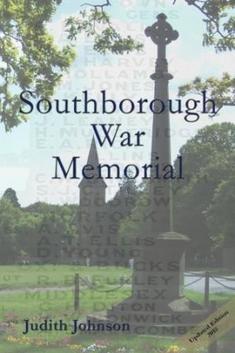
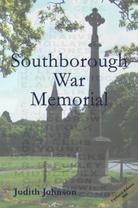
When we first published my book Southborough War Memorial through Odd Dog Press we had a modest print run, and when this was sold out, there didn’t seem to be a case for a further re-print, though we did subsequently produce a Kindle version. Fortunately, with the advent of print on demand, we are able to publish a revised version, with some extra material I’ve been sent by relatives since the first edition in 2009. I’m particularly pleased to include a photograph of George Furey, a Newfoundlander whose tremendous act of courage went largely unrecognised, apart from by those who witnessed it or whose lives he saved in December 1942.

A book which lists as much detail as I could find in my research on the two hundred and fifty-five listed on the local war memorial in our small town must, by its nature, be a niche offering, and yet, if you read through it, you would, in an oblique way, be absorbing a universal story - of the effects of war on any community. There were those who died of battle wounds, certainly, but also others who died in accidents while training or on active service, of influenza, or of drowning. Many left families behind to struggle with grief and poverty, some hadn’t had time to outgrow their teens, and there were those who died after the war’s end as a result of their experiences.

I have a page on my website for those not commemorated, and for those wounded. Of course, the wounds of war are not always visible, and we know that there were many who were irrevocably affected by war trauma, tucked away in mental hospitals, out of sight, to end their days.

This book is a small contribution to recording the effects of war; it was a labour of love that brought it to fruition, and I am personally happy it is no longer out of print. I was recently contacted by the grandson of a First World War casualty, whose descendants are planning to gather at his grave on the one hundredth anniversary of his death.  My hope is that public commemorations taking place this year of deaths which occurred a century ago will, for many of us, serve not as jingoistic celebrations of Britain’s long-past empire, but for the opportunity to reflect on those suffering in wars both in 1918, 2018, and every season in between.

I believe there is a Chinese proverb that goes something like ‘May you not have sons in times of war’. Indeed. Though today of course this may extend to daughters.

The father of Harold Dowdell (commemorated on Southborough War Memorial and on the Thiepval Memorial to the Missing of the Somme) wrote in his diary on hearing of his son’s death in 1916:

Echoes and shadows in the home. I am not stunned but overwhelmed. My dear brave loving cheerful, thoughtful boy.

and two years later, when he lost a second son, Ernie, at Arras in April 1918:

With aching heart I reached home in afternoon. My desolate home.

Click here for online ordering.


2 Comments

Clem Attlee, Labour’s great reformer

4/6/2017

1 Comment

 
Picture

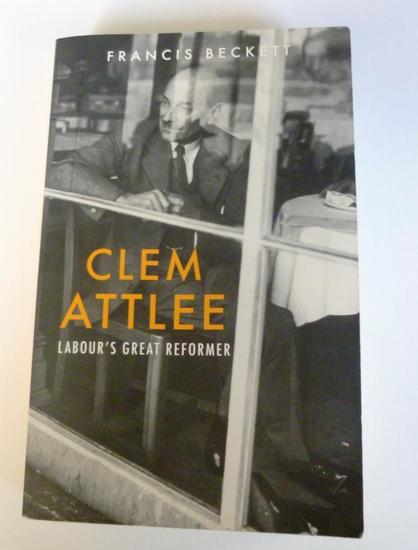
I’ve voted Labour all my life, except for a period after Tony Blair led us into war on Iraq, and even then, could not have voted Conservative. We watched the news as a family when I was young, and I have a clear memory of the Labour politicians of my youth: Harold Wilson, Barbara Castle, Dennis Healey (I bumped into him once on Charing Cross Road and he gave me a lovely twinkly smile from beneath those bushy eyebrows). They were the bright young things when Clem Attlee was Prime Minister, and although I knew his name, I was sadly unaware of the extent of this man’s huge contribution to the quality of life for British people over the last 70 years. After reading Francis Beckett’s beautifully written and accessible biography of the man, I feel better informed.

Clem Attlee was a small, quiet man, from a middle-class background. He was educated at Haileybury, a boarding school, and Oxford,  following his father into a law practice. Had it not been for some voluntary work  he undertook in the East End of London, this ex-Major, who saw active service in the First World War (he was the last but one soldier to leave Gallipoli when it was evacuated), might have lived an altogether different life.

One evening in 1906, Attlee went along with his brother on a visit to a youth club in Durham Road, Stepney. Haileybury House had been built by old boys of their former school who had decided, in 1890, to do something to help clergy active in the working-class areas of the big cities. One of the growing influences leading to this work was a pamphlet published by the Revd Andrew Mearns in 1883 - The Bitter Cry of Outcast London: An Inquiry into the Condition of the Abject Poor.

A shy young man, Attlee found the evening uncomfortable, but he learned enough to want to come again - the start of a process which opened his eyes to the appalling conditions suffered by those less fortunate than the prosperous Edwardian middle and upper classes, and the real meaning of poverty. His involvement increased from that night on - he felt for the first time in his life he was doing something with a purpose. He realised, as Andrew Mearns had written, that only large-scale action by the state could have any serious impact - unless society was organised so as to eliminate it, the wretchedness he saw around him would continue for ever.

By 1907, Attlee was a socialist, and he began his political career as a member of the Stepney branch of the Independent Labour Party. He very quickly took on the onerous and painstaking duties of branch secretary, giving his time and skills unstintingly. His closeness and work with the ordinary East End people and orderly upward progress through the rank and file of the local Labour group gave him an invaluable insight into their real problems, aims and ambitions. As Beckett relates:

'He took on all the humble, time-consuming jobs which have to be done, and which ambitious politicians generally consider are for lesser mortals, because, like Jim Callaghan, Clem Attlee liked all that. He cut up loaves to feed dockers'  children during the 1911 dock strike, and stood at the bottom of Petticoat Lane with his brother Tom holding collecting boxes during the Irish Transport and General Workers' Union strike in 1913. He carried the Stepney Independent Labour Party branch banner on demonstrations through Central London. He went to court to plead mitigation when a half-starving boy was caught thieving.'

Beckett’s book outlines the life of a man who dedicated himself to working, for 16 hours a day for 45 years or so, for the good of the many, not the few. He became Mayor of Stepney, then its MP in 1922, a junior minister in Labour governments in the 20s and 30s, and party leader in 1935.

Attlee's commitment to realising his ambition of bringing about fundamental changes for the working-classes achieved, with his fellow Labour party workers, the radical creation of what we benefit from today. Most people of my generation (born in the 1950s) and those since have no knowledge or experience of what life was like before the welfare state - we’ve taken it for granted.

He was in many ways, a very unusual man. He led a quiet and modest home life, dedicated to his wife and children, never ‘taking work home’ to his family. He liked mending things in his spare time. He never read the papers or watched television. He worked steadily towards his aims, not swayed by the opinion of others. He was not a pacifist, though his older brother Tom was a conscientious objector, but  had been appalled by the waste of life he witnessed in the Great War, and was a passionate supporter of the League of Nations and later the United Nations. His early experience of social work contributed to his writing The Social Worker,and  teaching the subject at the LSE. He had very definite views about charity: he thought that if a rich man wanted to help the poor, he should pay his taxes willingly, not dole out money at whim. He wrote:

Charity ‘tends to make the charitable think that he has done his duty by giving away some trifling sum, his conscience is put to sleep and he takes no trouble to consider the social problem any further’. 

Attlee served in Churchill's coalition government as Deputy Prime Minister during the Second World War, effectively running the country while Churchill concentrated on the business of fighting the war. Attlee was a staunch patriot, but once the war was over, he had an iron resolve to ensure that, unlike the aftermath of the First World War, when so many were thrown onto the streets, this time the opportunity to effect real change in the social welfare of the majority of the British people would not be lost.  After the war, Attlee led the most influential reforming government of the last century, implementing the recommendations of the Beveridge Report, establishing the NHS and nationalising a fifth of the UK economy including the coal mining and steel industries.

There are many similarities between Clem Attlee and Jeremy Corbyn - both suffered/suffer at the hands of the media - in Attlee's case, the rich owners of large-circulation newspapers. Both had to contend with members of their own party complaining that they weren't  leadership material, and regularly plotting to replace them. The more things change, the more they stay the same, as the saying goes!

I believe that if Clem Attlee was alive today, he would be horrified at the way his life's work has been steadily undermined in the intervening years, a process begun during the Margaret Thatcher years, of course, and now being greatly accelerated.

If you need just one out of many reference points from a welter of current revelations about how the welfare state and NHS are being relentlessly deconstructed, please read this article about the Naylor report, about which many of us had been ignorant until this week!

www.independent.co.uk/news/health/naylor-report-tory-nhs-privatisation-healthcare-flog-off-conservatives-theresa-may-election-2017-a7766326.html    

​If you have more time available, and I can promise you, it will be very worthwhile reading it, I highly recommend you read Francis Beckett's book. Towards the end of it, there is a little story of an incident, near the end of Attlee's life, which illustrates his modesty and humility. In 1912, the London School of Economics initiated took over a small School of Sociology, and Attlee was appointed its very first lecturer. In 1962:

'The LSE's Social Administration Department, where he had once taught, sent round a standard invitation to all of its former staff to celebrate its fiftieth anniversary. The organisers thought that the early staff members had died, but just as the platform was settling down in the Shaw Library, someone noticed a small, elderly man arriving inconspicuously and taking a seat at the back. Bernard Crick remembers: 'One of the platform party ran to the back in embarrassment to apologise and try to persuade him to come up to the front. He refused, or rather demurred. The audience, as he was recognised, rose to its feet and applauded. Only then would he join the platform. Afterwards they asked when his car was coming. "No car, came from Kings Cross on the 68 bus. A very reliable route." They had great difficulty persuading him to take a lift back.'

1 Comment

A Bite at Brodsworth Hall

16/4/2016

0 Comments

 
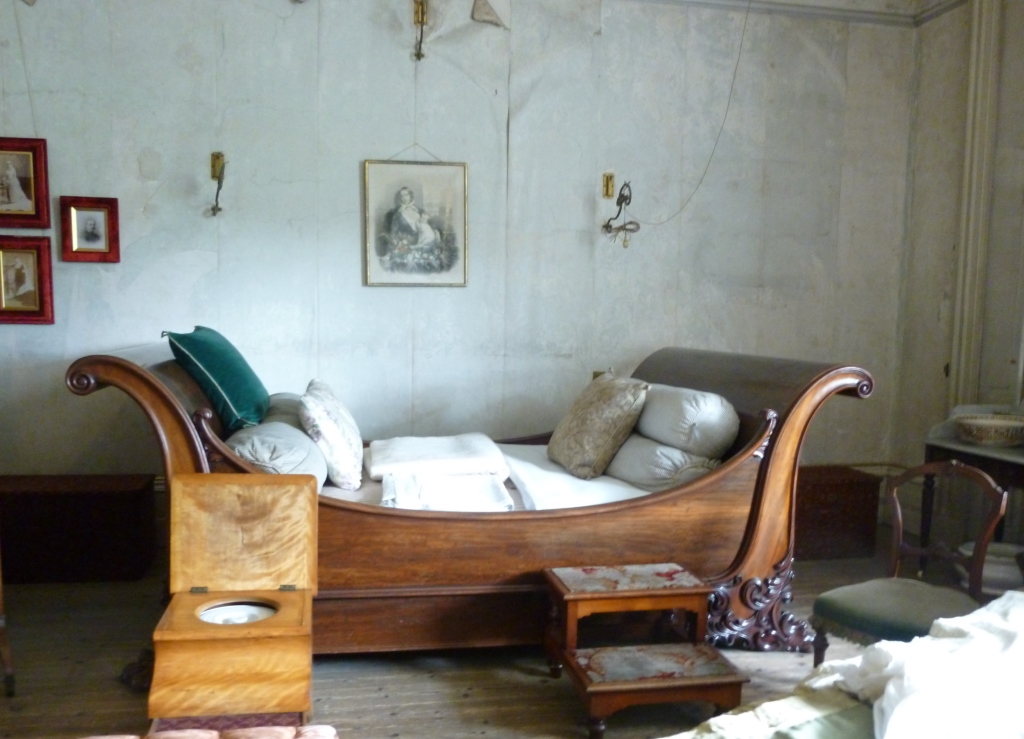
PictureBedroom with French bed
When our son was small we invested in a National Trust annual family pass  - it enabled us, at a time when funds were very modest, to take him regularly to Bodiam Castle, Scotney Castle, and Bateman’s (Rudyard Kipling’s House), all (almost) on our doorstep.  These days I’m the owner of an English Heritage pass, which means wherever I go I keep a weather-eye open for that nice brown castellated square sign!

Last week on a work trip I found myself early for an appointment in Adwick le Street, South Yorkshire, and observing lunchtime was nigh, in the happy position of spying one such serendipitous find: Brodsworth Hall - just three miles from my destination. I had a quick bit of snap (delicious leek tart and salad) in its tea rooms, then whizzed off round the house.

This is one of those properties which have not been refurbished and refurnished with items from elsewhere, but left largely as it was when its last owner, Sylvia Grant-Dalton, died there in 1988. In some ways it reminded me of Erddig, which I visited as a child, with its peeling wallpaper, and, in some areas like the kitchen, a charming unreconstructed mix of old and new. Brodsworth Hall, a grand Victorian family house, was built by Charles Thellusson, and the same family lived there for over 120 years. An earlier house, built in the 17th  century,  had been demolished and the site moved from beside the nearby church of St Michael and All Angels.

One of the guides told me that the Thellussons had come from French Huguenot ancestry, making their fortune in the 18th century originally, from banking, among other things, and sugar plantations in Montserrat. Might the Jamaican mahogany doors on the ground floor, recycled from the old house, have come from another plantation? I wonder how many great English country houses owe their grandeur to wealth partly gained from slave-owning?

It amuses me when people speak reverently of ‘old families’ (like for example the Brudenells, who are said to have been established as aristocrats before the Norman Conquest). Aren’t we all from old families, even if our ancestors haven’t lived in the same house for hundreds of years?

I didn’t have time to see the wonderful formal gardens at Brodsworth, but I was powerless to resist the room full of second-hand books for sale in aid of English Heritage’s work. I was delighted to find two good’uns:

Everyman and Medieval Miracle Plays (particularly welcome as I was so disappointed with the National Theatre’s recent version of Everyman, re-modelled by Carol Ann Duffy, and am keen to read the original), and The Wreck of the Abergavenny - The Wordsworths and Catastrophe by my kinswoman Alethea Hayter*. Sadly I never had the pleasure of meeting her, though her brother Sir William Hayter was my godfather, so I’m very much looking forward to reading it.
 
Amazing what you can find when you’ve got your eyes open!

​*
Obituary of Alethea Hayter 
Click on Family photo under Childhood on this page - Alethea and William Hayter are 2nd and 3rd from the left in the back row

0 Comments

Children's Games

2/4/2016

0 Comments

 
Picture
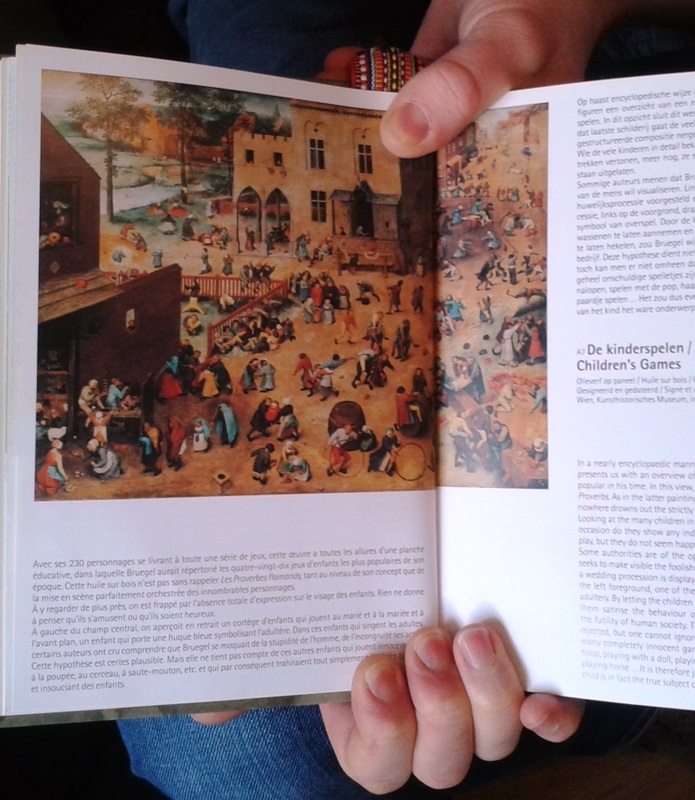
My son is an artist and an art teacher, and one of his favourite artists is Pieter Brueghel  the Elder. We both love the painting entitled Children’s Games, and much enjoy identifying the different activities.

When I worked at a large girls’ school which boasted an excellent library, I was known by the librarians for checking out the weighty tomes which, more often than not, no pupil or indeed teacher had ever borrowed. One such book was the acclaimed study by Iona & Peter Opie, The Lore and Language of Schoolchildren, which took me weeks to plough through, but not without reward!  One of the things that interested me was their conclusion that the learning of  games in the main by-passes adults: it is mostly children who communicate and pass them on to other children.

When I was a girl, it was fashionable to hold seances, and I remember the time I set up a circle of letters round a glass in my older sister’s bedroom (most of the family were out), and I and two cousins began to summon the spirits. As the glass started to move we rose as one and fled screaming from the room! Later in life I met a 1960s alumna of above school who recalled the time when a seance had been organised in one of the dormitories.

“Is there anybody there?” was asked.

At this, the glass began to move, and after affirming that there was, spelt out the word F-I-R-E. Seconds later, the school fire-bell went off, and it transpired that at that moment a fire had been discovered in the Domestic Science block, formerly the great house’s stables. Needless to say, the girls were terrified, and the story spread round the school rapidly. The Bishop of Dover was summoned by the Headmistress and spoke at Assembly the following Sunday on the evils of tampering with the dark arts of the Ungodly.

Reading Pepys’ Diary last night, I was delighted to come across a mention of a lunch-time game we played at Tunbridge Wells Grammar School in the late 1960s/early 1970s, which was clearly being played by children at least 400 years earlier. I recall six of us standing around another girl, who lay on a table in the empty art room. We went round the circle, ceremoniously uttering in turn the words:

“She looks pale.” This was followed, one line at a time, and each reciting by rote, by the following:

“She is pale.”

“She looks ill.”

“She is ill.”

“She looks dead.”

“She is dead.”

And with this, we each slipped one forefinger under the prone girl and, together, lifted her several feet in the air with seemingly no effort at all, as if she was weightless.  We had no idea how it worked, but it did work, and it afforded us great satisfaction!

So when I came across Pepys’ entry for 31 July 1665, I called out to my husband: “Listen to this!” (he had also, I knew, played the game at school):

This evening with Mr Brisband speaking of inchantments and spells, I telling him some of my Charmes, he told me this of his own knowledge at Bourdeaux in France. The words these:

Voicy un Corps mort
Royde comme un Baston
Froid comme Marbre
Leger comme un Esprit
Levons te au nom de Jesus Christ.


He saw four little Girles, very young ones, all kneeling, each of them upon one knee; and one begin the first line, whispering in the care of the next, and the second to the third, and the third to the fourth, and she to the first. Then the first begun the second line, and so round quite through. And putting each one finger only to a boy that lay flat upon his back on the ground, as if he was dead. At the end of the words they did with their four fingers raise this boy as high as they could reach. And he being there and wondering at it (as also being afeared to see it - for they would have had him to have bore a part in saying the words in the room of one of the little girls, that was so young that they could hardly make her learn to repeat the words), did, for fear there might be some sleight used in it by the boy, or that the boy might be light, called the cook of the house, as Sir G. Carteret’s Cooke, who is very big, and they did raise him in just the same manner.
 
Fascinating, eh? Love to hear from any of you with your experiences and stories about children’s games - comments welcome!

0 Comments

A Peep at Pepys

20/3/2016

3 Comments

 
Picture
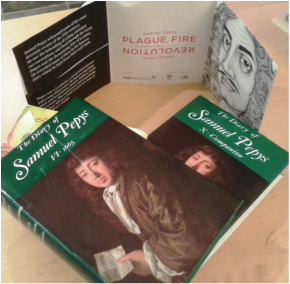
Some years back an elderly lady who was moving into sheltered accommodation made me a present of three lovely gifts: a Himalayan blackberry briar from her garden, a vintage Creda Debonair spin-dryer, and a complete set of the Latham/Matthews version of The Diary of Samuel Pepys in hardback (ten volumes including Companion and Index).

My bedtime routine includes writing a diary, followed by a nightly dip into Mr Pepys’s - I’m currently up to July 1665,with the Plague building to a crescendo.

I’ve a few things in common with Samuel, I find. I hope, for instance, that I might be distantly related to his clerk, Mr Thomas Hayter, whose character, the Companion informs me “seems to declare itself in his neat and regular handwriting”. I lived for some years in both Islington and Hackney,  Pepys’s favourite summer jaunt , and may have cycled past some of his childhood haunts in Kingsland and Newington. We were both born under the sign of Pisces, love London, art, music, reading, and derive great pleasure from the execution of an administrative task well done! Were he alive today, I think Samuel would have been tickled to know that George Frederick Handel, another devoted Londoner, was born on his 52nd birthday. I hope he would also relish, as I do, the sea-stories of Patrick O’Brian featuring Captain Jack Aubrey & Stephen Maturin.

One of my birthday treats this year was a visit to the National Maritime Museum to see their exhibition: Samuel Pepys: Plague, Fire, Revolution. I love the NMM in its beautiful setting, with the Royal Observatory above on the hill. It never fails to touch me when I walk past the model of the Rawalpindi on the way in, and remember the fate of those who died in her in World War 2, including  a man from the town where I live.

I was a little bemused initially by the half-light in the exhibition rooms (emulating 17th century light levels ?), but it was great to see the many artefacts and portraits on display, including the John Hayls portrait of Pepys. I loved the large slipware plate which commemorated the Boscobel oak in which Charles II hid after his defeat at the Battle of Worcester in 1651 (am I mistaken in recalling that the tomb of his companion on that day, Richard Penderel, was located in St Giles’ Churchyard off London’s Denmark Street? Last time I went there I found the lettering so eroded, it could no longer be read).

The engraving of a man being prepared for the surgical removal of a kidney stone was twingingly graphic, the medical instruments displayed even more so! The stark digital presentation of the numbers who died during the time of Plague showed  how shocking the mounting death levels must have been, peaking, in August and September 1665, in  over 7,000 per week in London alone. I was prompted, on my return home, to download the Kindle version of Daniel Defoe’s A Journal of the Plague Year for further reading!

Pepys’ diary, together with documenting the great dramas of life, recording historic events and encounters with the great and the good, also brings home the truth that people from earlier centuries shared similar concerns with our own: worries about job prospects, upsetting the boss, financial insecurity, family squabbles, aging parents, marital tiffs, overspending, aches and pains, and (for we churchgoers) the occasional boring sermon, etc! There was a reproduction in the exhibition of a large group portrait showing a visit to Christ’s Hospital of the King and courtiers, with Pepys (a Governor of the School) perusing a map. It included  some charming detail depicting schoolchildren doing the things children  do - and being ticked off in the same way they presumably have been since time immemorial!

Pepys dearly loved having family and friends over for a meal and a good time, and the day after our visit we enjoyed a jolly get-together. We were very merry, in true Pepys fashion, and, amazingly in this smartphone age, we realised, once everyone had gone, that no-one had taken the now almost obligatory photo for Facebook, so only fond memories and my diary must stand as a record of the occasion. I feel glad for that too!

The exhibition has left me determined to take a trip some time to Magdalene College, Cambridge to see Pepys’s library, and another to the Historic Dockyard at Chatham. In the meantime, for those of you who might like to see the Exhibition at Greenwich, it closes at the end of this week on 28 March - so hurry if you want to catch it!

3 Comments
<<Previous
Forward>>
    Picture

    Author

    Lifelong bookworm, love writing too. Have been a theatrical agent and reflexologist among other things, attitude to life summed up by Walt Whitman's MIRACLES.

    If you would like to subscribe to my blog, please click on RSS Feed link below:

    RSS Feed

    Categories

    All
    Arts
    Books
    Family Matters
    History
    Miscellaneous
    My Fantastic Five
    Natural World
    People
    Running & Walking
    Travel

    Archives

    November 2021
    February 2021
    June 2020
    May 2020
    April 2020
    November 2019
    April 2019
    March 2019
    February 2019
    January 2019
    December 2018
    November 2018
    October 2018
    June 2018
    March 2018
    June 2017
    May 2017
    March 2017
    February 2017
    December 2016
    November 2016
    October 2016
    September 2016
    August 2016
    June 2016
    May 2016
    April 2016
    March 2016
    February 2016
    January 2016
    November 2015
    October 2015
    September 2015
    August 2015
    July 2015
    June 2015
    May 2015
    April 2015
    March 2015
    February 2015
    January 2015
    December 2014
    November 2014
    October 2014
    September 2014
    August 2014
    July 2014
    June 2014
    May 2014
    April 2014
    March 2014
    February 2014
    January 2014
    December 2013
    November 2013
    October 2013
    September 2013
    August 2013
    July 2013
    June 2013
    May 2013
    April 2013
    March 2013
    February 2013
    January 2013
    December 2012
    November 2012
    October 2012
    September 2012
    August 2012
    July 2012
    June 2012
    May 2012
    April 2012
    March 2012
    February 2012
    January 2012
    October 2011
    September 2011
    August 2011
    April 2011
    March 2011
    February 2011
    January 2011
    October 2010
    April 2010
    January 2010
    December 2009
    September 2009
    July 2009
    February 2009
    January 2009

    RSS Feed

Powered by Create your own unique website with customizable templates.