Judith Johnson
  • Blog
  • About me
  • Poetry
  • Miscellanea
  • Travels
  • Projects
  • SWM Extra
  • Pen Portraits
  • Contact/To Buy

100 years ago - Roland Eldridge

11/11/2016

0 Comments

 
Picture
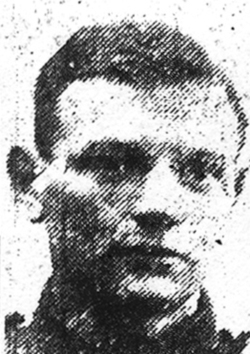
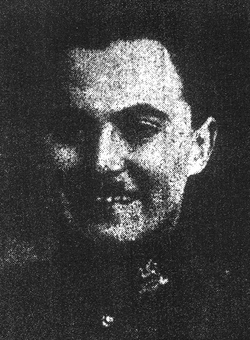
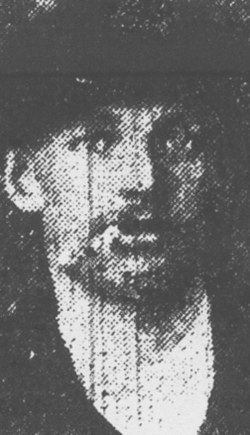
Private Roland Eldrige, No 1945, 19th Bn Australian Infantry, AIF, died on 11 November 1916, age 31. He is Buried at Heilly Station Cemetery, Mericourt l’Abbe, Somme, France: Grave ref V.E.3. He was the son of Ellen Eldridge of 21 Forge Road, Southborough, Tunbridge Wells, Kent.

Roland had emigrated to Australia at the age of 21 and worked as an agriculturist at Surrey Hills, Sydney, New South Wales. He had served with the Kent Volunteers in England. He embarked at Sydney on HMAT A54 Runic on 9 August 1915.

From the Courier, 24 November 1916: Mr and Mrs Eldridge of Forge-road have received the following letter from a Chaplain of the Australian Forces: “I am very sorry to say that your boy was brought in here last night hopelessly wounded. He was unconscious, and did not live long after leaving the ambulance. I have just buried him in our little cemetery, where so many of our brave lads lie. His grave will be marked with a cross.” Private R Eldridge is the fourth son of Mr and Mrs Eldridge, and he joined the 19th Battalion Australian Forces in December 1914. He was twice wounded while serving in the Dardanelles. It is a coincidence that he should have been killed four days after Sergeant Parker (whose death was reported last week) with whom he went to Australia about seven years ago. Mr and Mrs Eldridge have three other sons serving in the Army.
0 Comments

Berlin - early morning strolling

30/9/2016

0 Comments

 
Picture
I’ve always suffered from piles! Yes, you’ll find them all over my house. I’ve recently been waging war on them using Marie Kondo’s decluttering methods, but have called a temporary truce, with other demands on my time intruding! My newspaper/magazine/newsletter pile recently yielded up a copy of The Guardian from late July. I enjoyed reading Lauren Elkin’s article Reclaim the Streets, on the subject of the flâneur, a figure of privilege and leisure, with the time and money to amble round a city at will, and developments since the 19th century, when the flâneur was something of a phenomenon. Elkin writes: “For a woman to be a flâneuse, first and foremost, she’s got to be a walker - someone who gets to know the city by wandering its streets, investigating its dark corners, peering behind facades, penetrating into secret courtyards.”

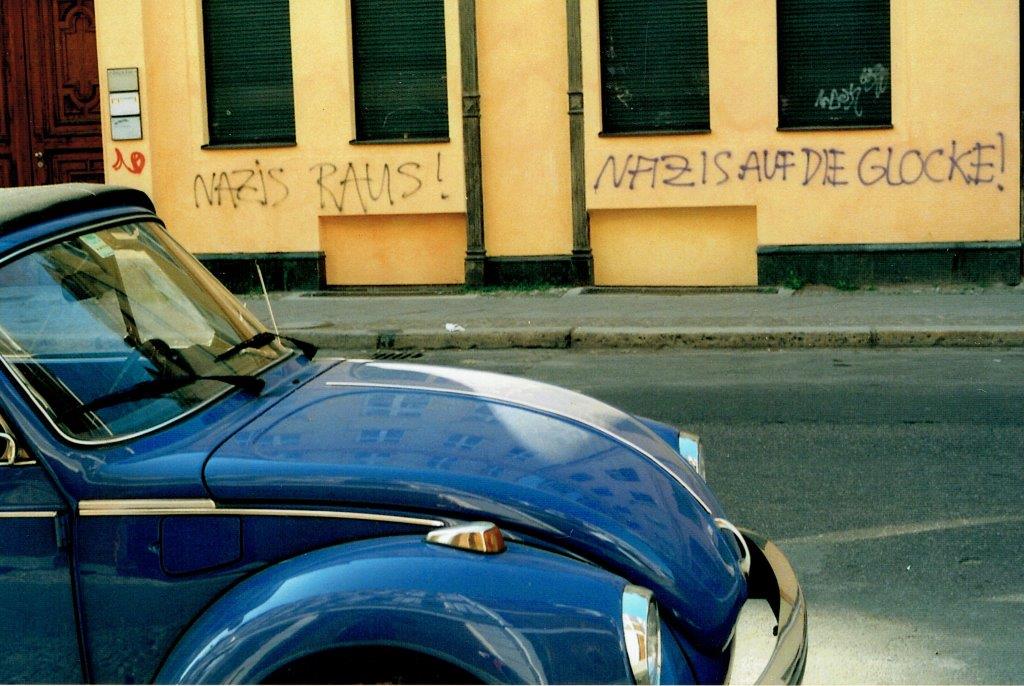
Well, I’m not a figure of privilege and leisure, but otherwise I reckon I fit the bill, and reading the article prompted me to dive into another pile to find a wallet of photos I took in 2002 on a work trip to Berlin. It was my first visit, a three day educational development conference on editing alumni magazines. For a history-buff like myself this was a heaven-sent opportunity to see something of  a deeply fascinating city. In order to make the most of it, I decided to get up at the crack of dawn each day and walk its streets, a favourite strategy in an unknown place.

I’d arrived courtesy of Lufthansa at the old Tempelhof airport, where the US Air Force hangars were still visible, and was thrilled, in an Indiana Jones moment, to see a Zeppelin airship warming up ready for take-off on one of the runways. I had some time before the introductory seminar  to catch the bus to the British Military Cemetery near Charlottenburg. It was established in 1945 as a central burial ground for aircrew and prisoners of war who were interred in the Berlin area and East Germany. About 80% are aircrew, killed in action over Germany, the remainder prisoners of war, and two Southborough men, Edwin Cooper and Cyril Wickens lie buried here.

Early the next morning I visited the old Jewish quarter, easily reachable from my hotel at the northern end of Friedrichstrasse. I walked over the Montbijou Brücke and down streets including Georgenstrasse, Ackerstrasse, Oranienburgerstrasse, Gross Hamburgerstrasse, Koppenplatz and Turstrasse. Whenever I saw a doorway open to an old courtyard, I nipped in and looked round (incurably nosey, ask my husband!). I saw a memorial to Berlin’s Jewish dead, and a lovely little Jewish school right by it. In 2002, there was, just fifteen years after re-unification, a huge amount of building and renovation going on. The array of wonderful old buildings (some in the old East Berlin still pockmarked with bullet-holes from 1945, or with plaster still missing from the bare brick walls) mixed in with the ultra-modern, the Spree meandering through, but underlying it all, for me personally, was the knowledge that while it’s a great and elegant city, in Nazi times it was full of terrible violence, hatred and fear for those daring to oppose the regime.

The next day I walked down to Checkpoint Charlie and beyond, then up via Leipzigerstrasse, Jerusalemstrasse, Hausvogteiplatz and Oberwallstrasse to Unter den Linden, past the German Historical Musem and Lustgarten to the Berliner Dom, where creative beer-drinkers had left an impromptu art piece on the steps of the Cathedral. An old man was doing some early-morning fishing from the Eiserne Brücke. Later that evening I ducked out of a suggested drinking session with colleagues and instead heard a beautiful concert in the Cathedral, which has sublime acoustics, given by a choir from Bonn, of Spiritual Choral Music from the last 300 years.

On my last morning I walked up to the Brandenburg Gate (covered up except for the Quadriga) and back past the Russian Embassy, down to the Marx-Engels Platz (now Schlossplatz I believe), where a woman in shorts roller-bladed round the Platz and down the tree-lined paths beside it. The Neptune Fountain was dry, no doubt a temporary casualty of ongoing works. I bought my son a Russian surplus army beret at the flea-market along Am Kupfergraben, had breakfast at Cafe Chagall, then caught the U-Bahn to Luftbrücke Platz, and walked through the little park, which includes a memorial to those who died in the Berlin Airlift, to Tempelhof, just in time to snap a Zeppelin taking off. Flying home, I knew I would definitely want to return and see more of Berlin.

If you’d like to read more around the subject, some of my other related blogs:
The Casualties of War
Holocaust Memorial Day - Anita Lasker Wallfisch
Berlin in October
Through a Glass, Darkly

0 Comments

Day out at Eltham Palace

3/9/2016

0 Comments

 
Picture
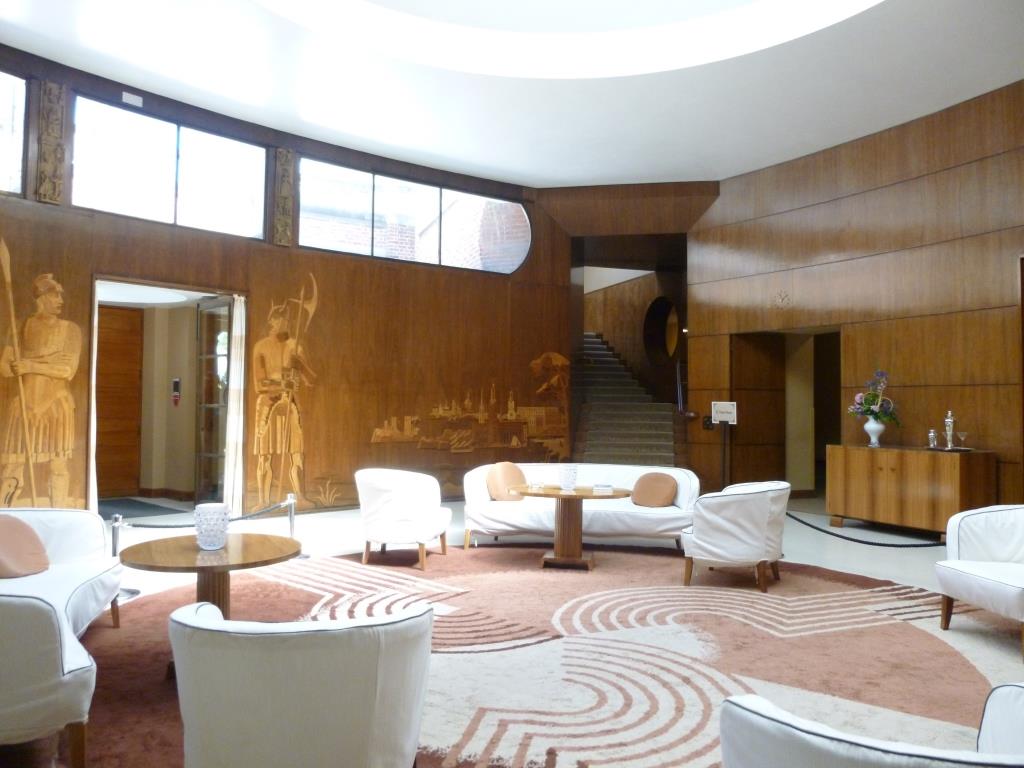
We recently visited Eltham Palace for the first time - a birthday treat for the pot and pan - with our son, daughter-in-law and baby grand-daughter. It was a lovely summer’s day, and the beautiful grounds around the old palace and its adjoining 1930s house were full of happy visitors - other multi-generational families were having fun too, listening to jazz on the lawn, or with kids playing in the adventure playground next to the cafe, relaxing and enjoying the  cameraderie of their fellow human beings.

There is something for everyone here: mediaeval architecture, 1930s modernist style, unusual garden plants, and in the distance a wonderful panoramic view of London - from Alexandra Palace across to the City, with many of its famous landmarks clearly depicted against the skyline. When Stephen and Virginia Courtauld had their 1930s Art Deco mansion built, incorporating the Great Hall where Henry VIII and his forebears once resided, there were critics abounding, but today, since its restoration by English Heritage after the Army Education Corps vacated the premises in 1992, most of its visitors would no doubt agree it is a splendid house.

Having both recently read William Woodruff’s wonderful memoir The Road to Nab End, it struck us, seeing the opulence here of a house created by its millionaire owners, with money no object, that there was, of course, another vastly different side to life in 1930s Britain. I urge you to read his book if you haven’t yet. It will remind you of what has been achieved in the last eighty years, and what we stand to lose if we are not careful...

Wandering out into the sunshine, we wondered what the strange-looking berries were on the tree at the end of the lawn. They looked like large, luscious raspberries crossed with blackberries. We had the good fortune at this point to bump into an Iranian family, who explained that they were mulberries; the family told us they had, on various outings in and around London, mapped most of its mulberry trees. I love this kind of serendipitous encounter, all the more so on this occasion, after discovering we were fellow bloggers, making the acquaintance of Mehrdad Aref-Adib, whose websites are treasure-houses, boxes of delights, which will bear many hours of happy browsing!

www.aref-adib.com
www.shahrefarang.com
  
0 Comments

1 July 2016

30/6/2016

0 Comments

 
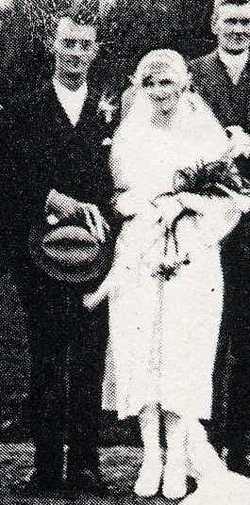
PictureHal & Ida on their wedding day
My grandfather Harold Edgar Shaw died when I was a child so I don’t know as much about him as I’d like. During the First World War he  was a medical orderly. He had trained as a pharmacist with Boots after an embezzler in his family, whose theft had to be repaid, made it financially impossible for him to train as a children's doctor, his cherished ambition.  Mum told me once that, when he set up on his own, and during the straitened times following the economic crash in 1929 and Great Depression, he often gave medicines to the needy without payment, though he could ill afford it.  She also told me recently, in one of her lucid moments, that he was a Labour man, through and through, all his life. He must have served in Egypt as well as on the Western Front, as my sister recalled he had some treasured 78s of Egyptian music which he had brought home from the war. In later life he loved to read the works of celebrated travel writer HV Morton, and I have inherited one of his books, A Traveller in Italy.

When I recall Grandpa I feel heart-warmed, and have an emotional memory of a kind, quiet, humble man. He ended his days in a mental hospital, where he used to wake in the night, weeping in great distress, believing he was back amongst the terrible scenes of the battlefields.

I have been to battlefield cemeteries of both world wars on a number of occasions, and stood at the graves of men from many nations - Chinese, Indian, American, Canadian, Australian, Russian, French, North African, German, Irish, Scottish, English and Welsh, all in their time deeply mourned and missed by their loved ones.   As most do, who visit these places, I am  always profoundly moved.

PictureOscar Maier
One young man commemorated on my local War Memorial was Oscar Maier, a Private in the West Kent Yeomanry (Queen’s Own), who died on 31 August 1916 in the Battle of Delville Wood, and was buried in Mametz, in the Somme. Ironically, Oscar’s parents were economic migrants from Germany, arriving in Southborough in 1895. They had heard from the War Office that Oscar had been wounded several weeks before his death was finally confirmed to them on November 29th. Until then they hoped he might still be alive. His younger brother, was 16 at the time. His son Clive told me “The only thing my father ever told me was that the telegram came on the morning of his sister’s wedding.  His father read the telegram, put it in his pocket, told no one and went through with the wedding. Only when the last guest had gone did he tell the family.”

On 1 July 2016, in one of many ceremonies, the democratically-elected leaders of the nations who took part in the First World War will gather for a ceremony at the Thiepval Memorial to the Missing near Albert, in France, to commemorate the appalling carnage of the First Day of the Battle of the Somme 100 years ago.
​
How desperately sad that what should have been a coming together of our leaders in a spirit of community and cooperation should be marred by the shocking division and hatred stirred up by the British referendum on 23 June.
 

0 Comments

The Indian Princess

10/6/2016

42 Comments

 
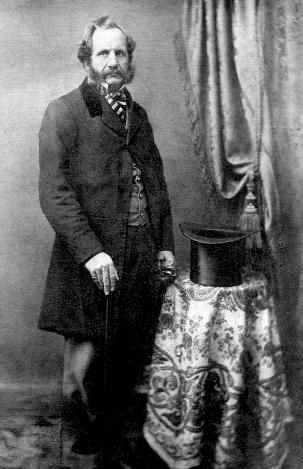
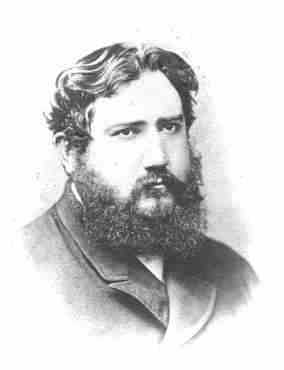
PictureJohn Howard Wakefield 1862
When I was a child, the story in my family was that my siblings and I were descended from an Indian princess. I knew that my father, James Hayter, had been born in India, and lived there until he was seven, but it wasn’t until some years later that I learnt more about my Indian ancestry.  My Aunty Janet and cousin Mary both had a passion for investigating the story of my great-great grandmother.

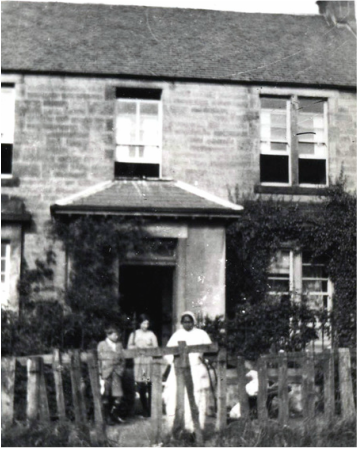
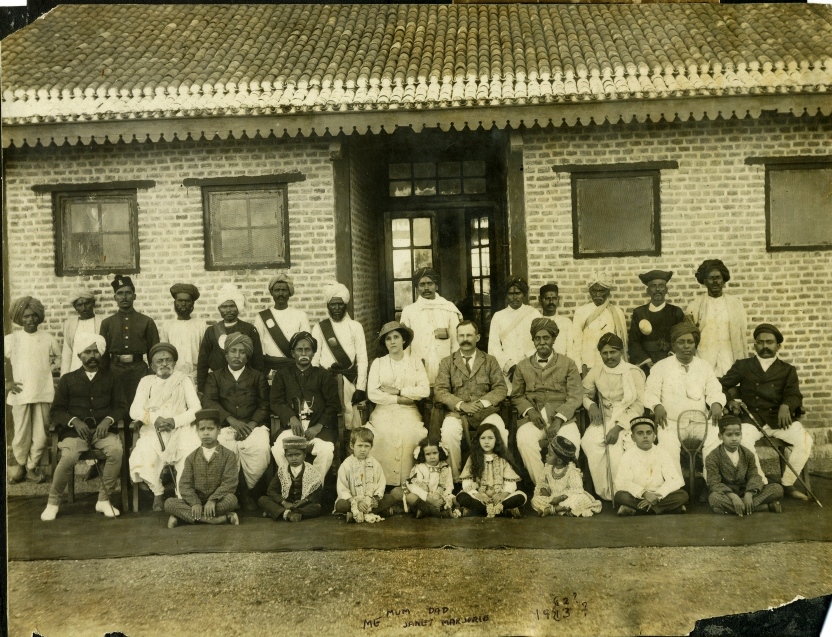
My father was born in Lonavala, a hill-station near Poona (now known as Pune), in Maharashtra, India,  in 1907, and was sent 'home' in 1914 for a British education at Dollar Academy, Scotland. He boarded with an aunt, and wasn't to see his mother again until after the end of the First World War. A family photograph of that time (see below) includes someone who was perhaps an 'ayah', who may have accompanied the children on the voyage. I read recently that these women were often shamefully abandoned after they outlived their usefulness. I hope this wasn't the case with my family.

PictureDad in Dollar
​My great-great-grandfather John Howard Wakefield  was a Lieutenant Colonel in the Indian Army, and First Cantonment Magistrate in Lahore. He had been born in 1803, into a Quaker family, and was the grandson of Edward Wakefield, London merchant in Gresham St, and Priscilla (Bell) Wakefield, authoress and botanist. One of his brothers was Edward Gibbon Wakefield, a coloniser of New Zealand.

It was said that John Howard  eloped with a young woman he first spied over the fence of an enclosure. It's not always possible to tease out fact from fiction, but it is rumoured that their meeting was the basis of the love story in MM Kaye's The Far Pavilions. He married her in 1831, she converted from Hinduism to Christianity, after being re-named Maria Suffolk.  She was the daughter of Kheru-Jumnu, Hereditary Vizier of Bashahr, and also the ward of the Rana of Kumarsain. I have been told that her father was put to death by the British for his part in the Indian Mutiny (I have recently read The Last Mughal by William Dalrymple, which was very illuminating on the subject of the Mutiny from the Indian viewpoint). Maria died in 1852, ten years before her husband.
​
I am told that John Howard Wakefield persuaded all of his regiment to take the pledge, and go teetotal, and that in 1862, resident by that time in Canonbury Square, Islington, he caught a chill on the way home from a temperance meeting at the Union Chapel on Upper Street and died soon after of pneumonia.
​
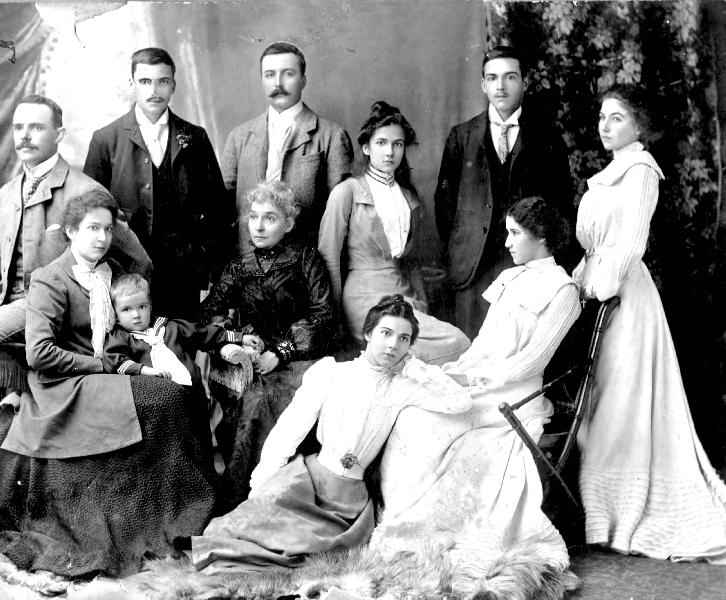
Their son, my great-grandfather, was George Edward Wakefield* (East India Company Deputy Commissioner Ludhiania, Punjab ) (1831-1892). One of his daughters was my grandmother Violet Mary Wakefield.

Picture
George Edward Wakefield
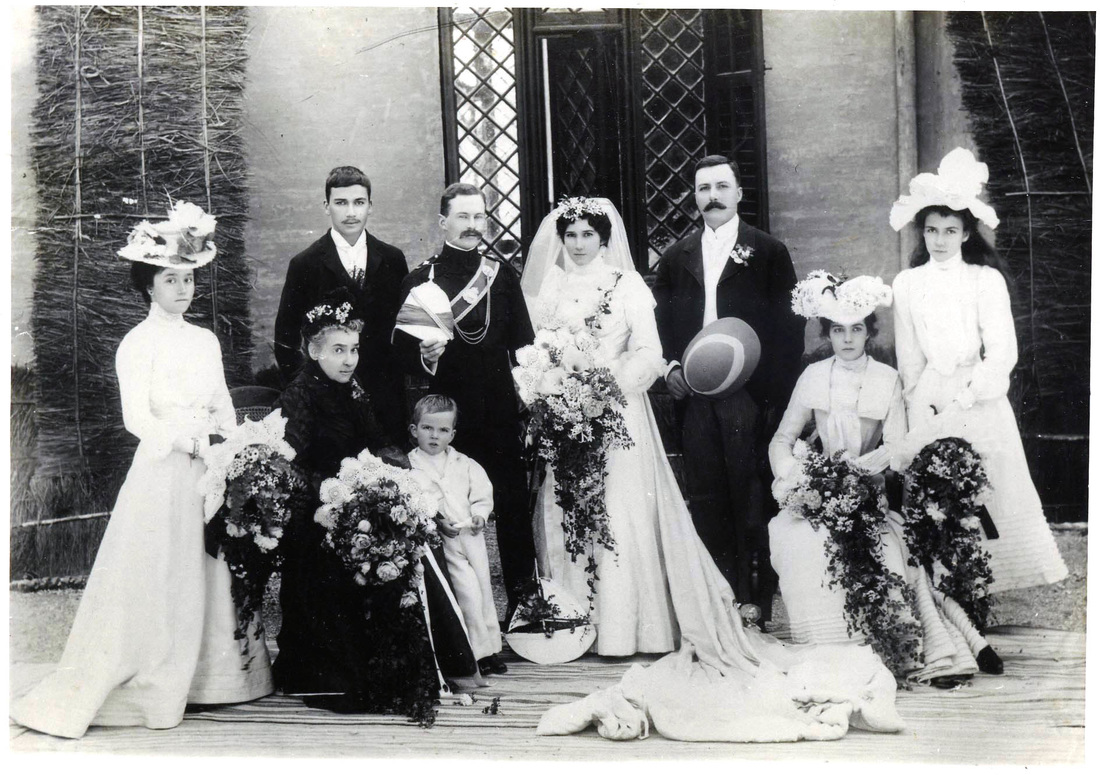
​My grandfather, Owen Chilton Goodenough Hayter was a Police Commissioner, in Simla, and he married Violet at Christchurch in Mussoorie circa 1900. They had thirteen children, but only five of them survived to adulthood (according to a Twitter acquaintance, Sanjay Argarwal, the church, the oldest in the Himalayas, is still maintained very nicely.) Eventually  my grandfather retired and they returned to live in England, but not all of Violet's siblings were willing to leave India, and some returned to India at the end of their schooling in the UK, including her brother Jack, who worked as Agent to the Maharajah of Tikari, and his son, Colonel John Felix Wakefield, who spent much of his later life working as Director of an elephant reserve/jungle lodge in Kabini, Kerala.
Picture
George Edward's wife and children
Picture
Owen & Violet's wedding at Christ Church, Mussoorie
Picture
Violet & Owen and household - Dad is 3rd from left, front row
In 1976, Aunty Janet, then around my age now, travelled to India for the first time since her childhood, flying in to Karachi and then taking the train to Hyderabad. She wrote: "Visited Gymkhana Club - just as remembered - and St Thomas Church...in the evening discovered to my great joy the bungalow we lived in, and had tea and delicious carrot sweet with the kind Lt Col's  family (the Najams) who inhabit it now...it was quite eerie going round the bungalow, and I expected to meet my own small self in a solar topee any moment”.

After an en route visit to Mohenjodaro, Janet flew on to Lahore "where I hoped to get help in tracing great-grandmamma's grave", which she did, via the Anglican Cathedral and the Diocesan Council's records of old burials.  She wrote: "...In the morning I called on the Reverend ...he called for someone to open a room going on the garden ... When the door was opened we were faced with a horrible smell. Don't go in, said the Reverend, "let the air go in first" ... the room had some odd growths hanging like strings from the roof, and one wall was lined with enormous leather-bound volumes in a very bad state of preservation and in no kind of order. They were going to fetch me a chair, and I was prepared to spend the whole morning, perhaps several mornings, searching. But by an extraordinary stroke of luck, the very first volume I picked out at random was an index of graves in the old Taxali Gate Cemetery, and so in less than five minutes I had found what I wanted... the Gate is one of the five gates of the old walled city... when I entered the cemetery my heart sank ... it is enormous ... and most of the gravestones have been knocked about and destroyed ... I walked through, and there it was - a plain slab of red sandstone flat but raised from the ground and in a remarkably good state of preservation, one of the best in the cemetery. Beautiful undefaced lettering."

Then she went on to Simla: "Explored Simla. Climbed Jacko - terribly steep - to Raja of Bushayr's house, which has what must be the most wonderful view in the world.

And on again, "breathtakingly lovely run", to Ranpur. "We climbed to almost 9,000 feet, and then gradually (the run took 6 hours), dropped down into a deep valley  made by the famous River Sutlej. Ranpur , the ideal capital of a small state ... one of the first free schools in India formed by the late Rajah Padam Singh ... on it is inscribed: BETTER UNBORN THAN UNTAUGHT, BETTER UNTAUGHT THAN ILLTAUGHT, and below that, COME AND LEARN GO AND SERVE and SERVE MAN AND SO SERVE GOD". (Note - I have inherited Aunty Janet's love of copying down inscriptions!)."The same Rajah built the new place, in 1926, where I am staying in lonely state ... in the grounds is an ornamental pavilion ... the most ancient building in Bushahr ... over it stands an enormous peeput tree - four or five hundred years old. I wonder whether Great Grandmamma played under it?... Taku Sahib, who is Chairman of the Municipal Council, thinks Great Grandmamma may have come from Pooh, another day's journey from here, and says there is a ninety year old there who is reputed to have talked about a Bushahr girl going off with an English soldier... alas! It is in restricted territory and I could only get a permit to go there in Simla... I'll have to come here again, later in the year next time."

Back in Simla, she "rushed to see Rajah of Bushahr, who said if I tell him the name of the Old Man of Pooh, he'll write to him and try and get some information for me. He said he was sure he'd seen the  name Wakefield on a sword or something."

In Mussoorie, she visited the church where her mother was married, and "Granny's house ... where we used to spend the hot weather ... I remembered how I had built a shrine on the steep bank above it and made a cross out of two bits of dried bamboo, and knelt there and prayed fervently. When I got bored with that I used to scramble down, go into the house, stand on a chair and steal toffee out of a large jar on a high shelf. Then I'd go back to my shrine and pray for forgiveness - and then back for more toffee, and then more prayers!"

I'd love to track down my great-great-grandmother's original home one day, should the opportunity present itself. I learnt today that 'in a step to create one of the largest repositories of Indian genomes, Bangalore-based Medgenome has teamed up with a southeast Asian consortium that has committed to sequence 100,000 Asian genomes. Were it to work to plan this could mean a consolidated storehouse of at least 30,000 Indian genomes'. So maybe one day I'll be meeting one of my distant Himalayan cousins!
 
 *John Howard’s aunt Isabella Wakefield married John Nicholson, Quaker of  County Down, and they had 16 children, the third child Alexander himself being the father of Brigadier-General John Nicholson, Soldier and Administrator, later styled ‘Hero of Delhi’, killed in the Indian Mutiny. He was Deputy Commissioner of Peshawar in 1857 with George Edward Wakefield (1831-1892, East India Company Deputy Commissioner Ludhiana, Punjab ) as an assistant (and also his first cousin, twice removed).
42 Comments

Death of an Airman: George Alfred Prime Jones

26/5/2016

11 Comments

 
Picture
When I was researching the names on the Southborough War Memorial I discovered many touching stories, a number of which featured men who lost their lives in training, no less poignant than those who were killed in action. George Jones died   in an air-crash 100 years ago this week, on a fine May morning in Kent.
 
George was born in Bolotwa, a town in Eastern Cape, South Africa. He came from a line of men who had served in the military. His father, WC Prime Jones, a Government Magistrate in Whittlesea, South Africa, had previously served with the Cape Mounted Rifles; his grandfather was Captain Richard Walker Jones, of Park Place, Sevenoaks Common, and his great-grandfather was Captain Richard Jones, RN, of Warehorn, Tenterden.
​
George lived with his aunts at ‘Ampthill’, 46 Pennington Road, Southborough,  and he was educated at Skinners' School in Tunbridge Wells, where he had been a member of the Officers’ Training Corps. George was well-known locally, particularly as a sportsman. A keen cricketer and footballer, he had played for Tunbridge Wells, Southborough, and several times for the Rangers (his prowess as a goalkeeper was “envied by every custodian in the district. Standing 6 ft 4 ins, his reach is a great asset, and he knows how to make the best use of it”). He had been asked to play for Tottenham Hotspur, and soon after joining the Army he had turned out for Brighton and Hove Albion.

He obtained a commission as Lieutenant in the 8th Battalion of The Buffs (East Kent Regiment) soon after the outbreak of the First World War, and went to the Front on 31st August 1915. He was wounded on 26 September in the Battle of Loos and promoted to Captain the following day. The Courier of 8 October reported:

‘He had an extremely narrow escape, a bullet striking his belt and glancing off, inflicting a flesh wound. A few minutes after - before he had recovered from the shock - a shell burst just behind him and rendered him unconscious for half an hour from concussion.’

About six months later, in the early Spring of 1916, George was attached to the Royal Flying Corps, then in its infancy, having been formed just four years earlier in April 1912. The Courier of 2 June 1916 reported that he "entered into the study and practice of aviation with the same enthusiasm that he has shown in everything else.  He had gained his pilot's certificate, and in about a fortnight or three weeks would probably have gained his 'wings'."

On the morning of 28 May, 1916, George went up as a passenger with Lieutenant Tennant, who had 20 hours flying time under his belt, for a practice flight from a local aerodrome in Kent. A police constable was on duty at the field being used by the authorities as a landing site, and at the inquest held two days later he reported that at 11am he "saw the biplane descend with Lieutenant Tennant acting as pilot, deceased being in the observer’s seat. They got out, had a smoke and a chat, and were both very cheerful, commenting on the fine morning. They stayed about a quarter-of-an-hour, and then prepared to return. The machine was not more than 100 feet up, when it appeared to gradually turn to the left, and then side-dipped, taking a nose-dive to the ground. Witness got to the spot two or three seconds after the machine fell, and found that Lieutenant Tennant had been thrown two or three feet clear of the machine, and was apparently badly injured, but was still living. Captain Jones was still in the machine, but was quite dead. It took about three-quarters-of-an-hour to get him out. Witness described his injuries, and said death was absolutely instantaneous. His wrist watch was still going when he was got away from the machine."

George Jones was given a military funeral at Southborough Cemetery, his coffin borne from his home on a gun-carriage drawn by six black horses. The mourners included his uncle, aunts Florrie, Leila and Maud, and officers and men of the Royal Flying Corps, but sadly, several members of his family  were unable to arrive in time. There are several other airmen buried in Southborough Cemetery, but Captain Jones must surely be the earliest.
​
As regards Lieutenant Tennant, this link indicates that he survived this accident, only to be killed one year later on the Somme.

His photograph can be seen here. 

For an account of the conditions encountered by RFC airmen in France, I can highly recommend this link, featuring Fighter Pilot Cecil Arthur Lewis, one of the founders of the BBC (unless the current Government's commands to the BBC have meant dismounting this section from the BBC's superb website!).

11 Comments

I love a Toby!

1/5/2016

0 Comments

 
PictureWatermillock House
Some years back, when a Toby Carvery opened in the village where my mother-in-law lived in South Wales, we approached hesitantly. Perhaps  the word ‘Carvery’ suggested to us a caveman-style meat extravaganza - we were pleasantly surprised by the reality! Not that there weren’t other places to eat on our regular visits from south-east England, but even a Welshman and his (Honorary Welsh) Saxon wife can tire of fish and chips, Indian takeaways, and griddle meals at pubs.

We’ve never ordered a la carte at a Toby, or drunk a bottomless soft drink (it’s nice to have your own teeth!), but the main course carvery, always at an amazing price (generally around £6), is a wholesome  offering that can be relied upon. Mam was happy to choose a portion of food that didn’t overwhelm someone of her generation, and we were happy eating a variety of freshly-cooked vegetables with our gammon/turkey/pork or beef. There’s always a tasty and imaginative vegetarian alternative too.

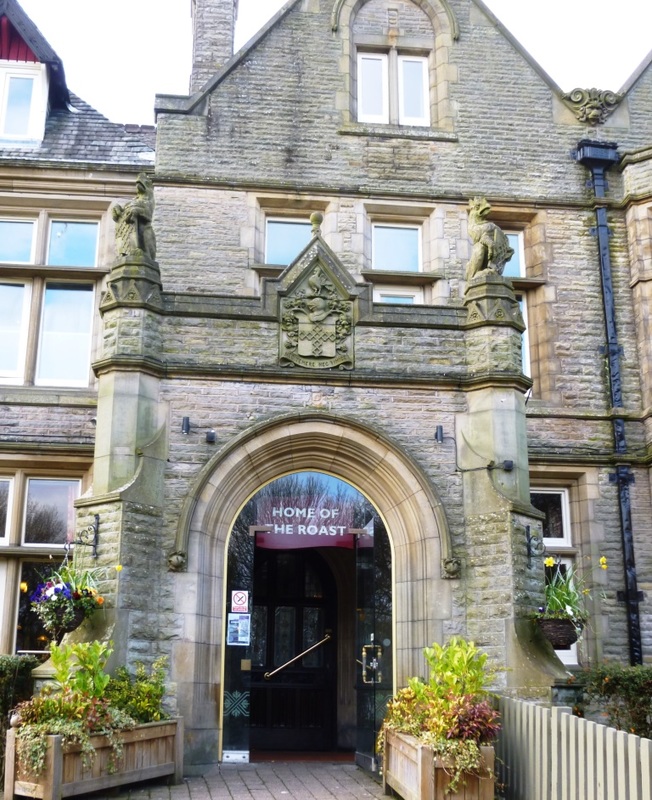
It’s still a good deal, at a great price, a real boon for school groups out on trips, where it’s good to offer the kids something other than pizza, burger, chicken nuggets etc. (though a bone of contention, for me, is above-mentioned bottomless drinks - not great for anyone’s health, let alone our children’s). Whenever  travelling in the UK, for pleasure or work, I tend to look up the nearest available Toby. If you’re not sure what time you’re arriving, or how much time you will have to eat, it’s really convenient to know you’ll get a decent meal without having to hang around. Recently, venturing North, I located one in Bolton near my accommodation.  They usually seem to be housed in 20th century pubs, so I was knocked out when I drew up in front of a stunning Gothic building in Crompton Way - wowsers!

PictureWatermillock House
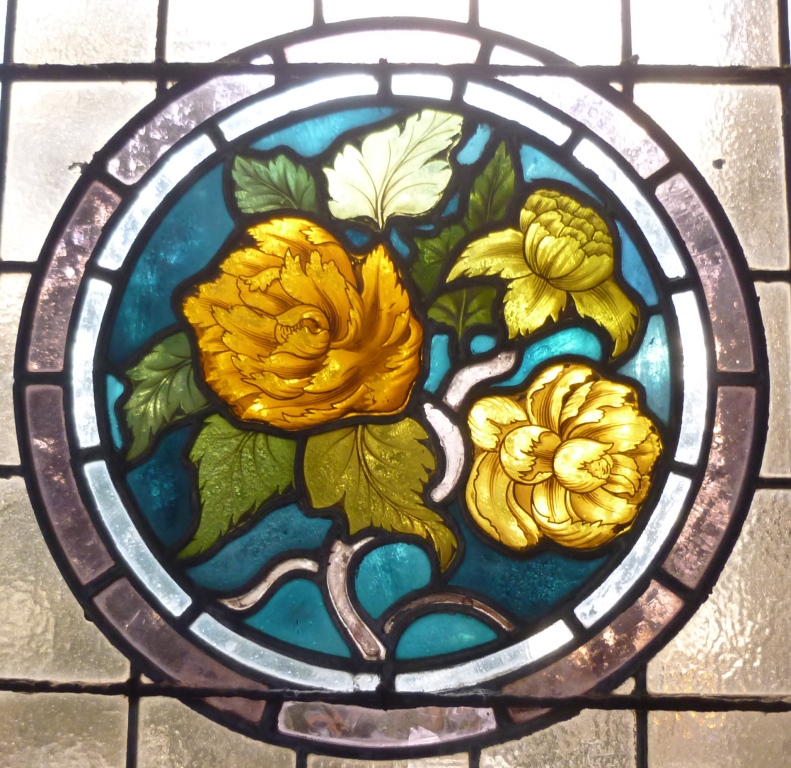
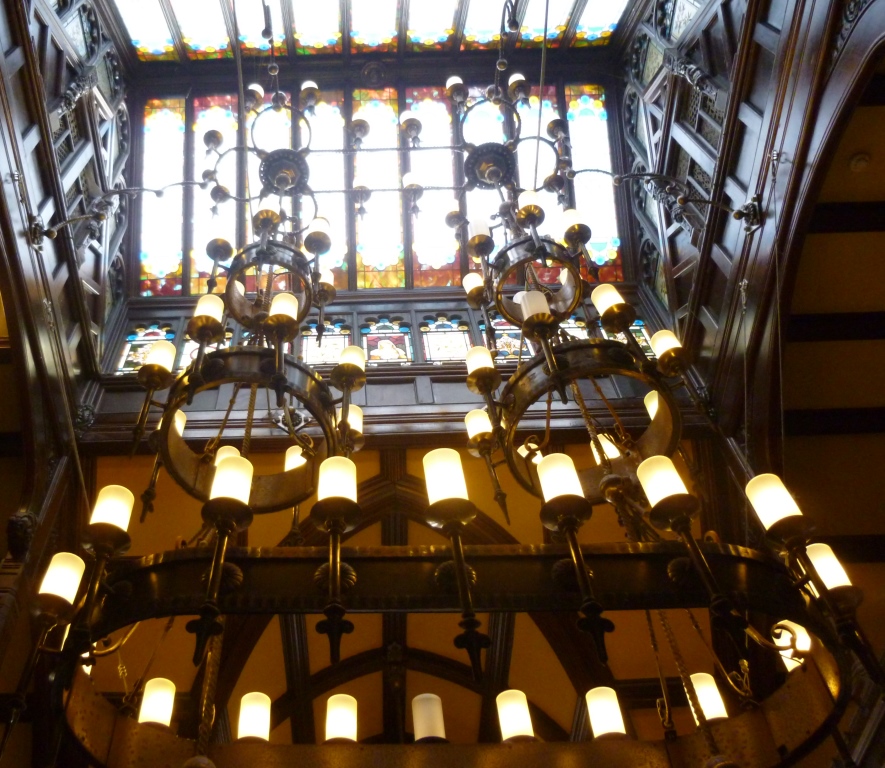
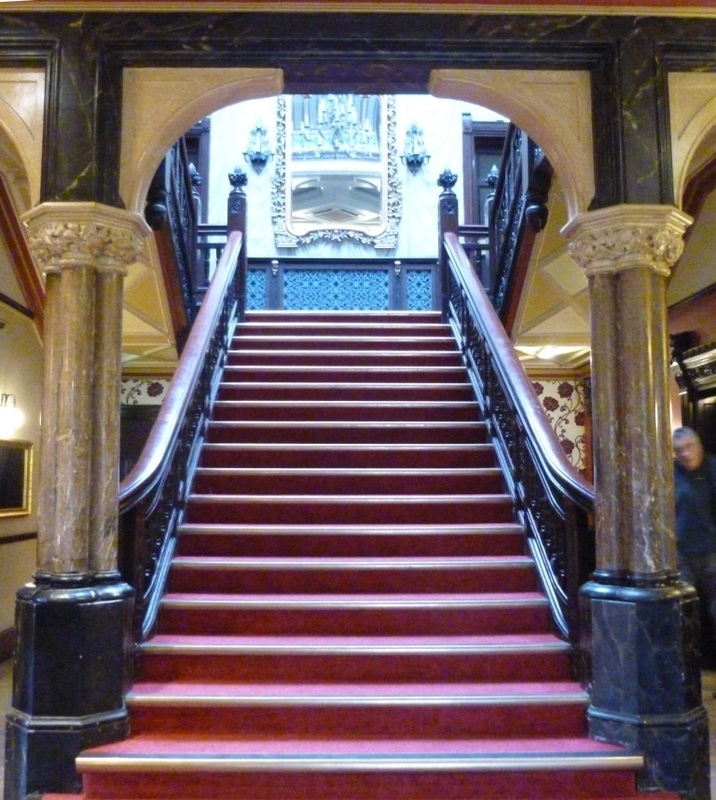
Apparently Watermillock House, a listed building, was originally a gentleman's country house, designed in the 1880s by Messr JJ Bradshaw and John Gass of Bolton (the architectural practice is still going) for Herbert and Thomas Thwaites (master cotton bleachers). It’s in Tudor Gothic style, with wonderful bat motif gargoyles and griffins as corner pinnacles, beautiful stained glass and arched doorways. Its interior is stunning  and includes a fireplace with de Morgan tiles.

The waitress told me that  in earlier incarnations the house had been a pub, an old people’s home, and was used as a military hospital during the World Wars, at one time specialising in the care of  pilots with horrific burns, among other casualties.  Between wars, in 1937, it had served as a hostel for refugee Basque children evacuated from Bilbao during the Spanish Civil War. I understand that local people did their very best to make the children feel supported and cared for, and funds were raised by colleges, schools and universities to help them. 

It occurred to me this would be a fab place to have a tour of in Heritage Weekend - and I see after a quick google that Bolton has many other wonderful sights to see - think I’ll aim for a repeat visit in the Autumn!

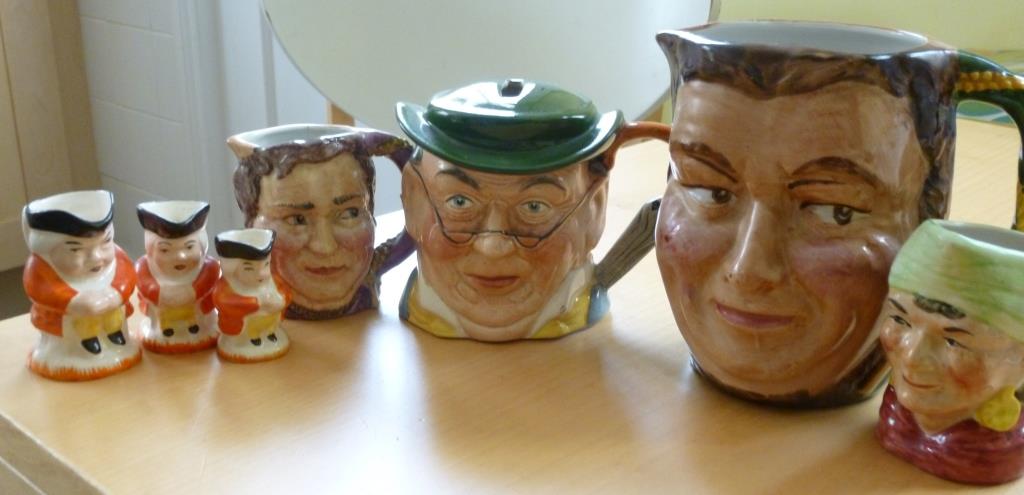
Finally - here’s my other Toby collection!  Two were modelled on my father James Hayter playing Friar Tuck, but my favourite is the hand-painted Kelsboro Ware version of him as Mr Pickwick, which I also think carries a better resemblance.

Picture
0 Comments

A Bite at Brodsworth Hall

16/4/2016

0 Comments

 
PictureBedroom with French bed
When our son was small we invested in a National Trust annual family pass  - it enabled us, at a time when funds were very modest, to take him regularly to Bodiam Castle, Scotney Castle, and Bateman’s (Rudyard Kipling’s House), all (almost) on our doorstep.  These days I’m the owner of an English Heritage pass, which means wherever I go I keep a weather-eye open for that nice brown castellated square sign!

Last week on a work trip I found myself early for an appointment in Adwick le Street, South Yorkshire, and observing lunchtime was nigh, in the happy position of spying one such serendipitous find: Brodsworth Hall - just three miles from my destination. I had a quick bit of snap (delicious leek tart and salad) in its tea rooms, then whizzed off round the house.

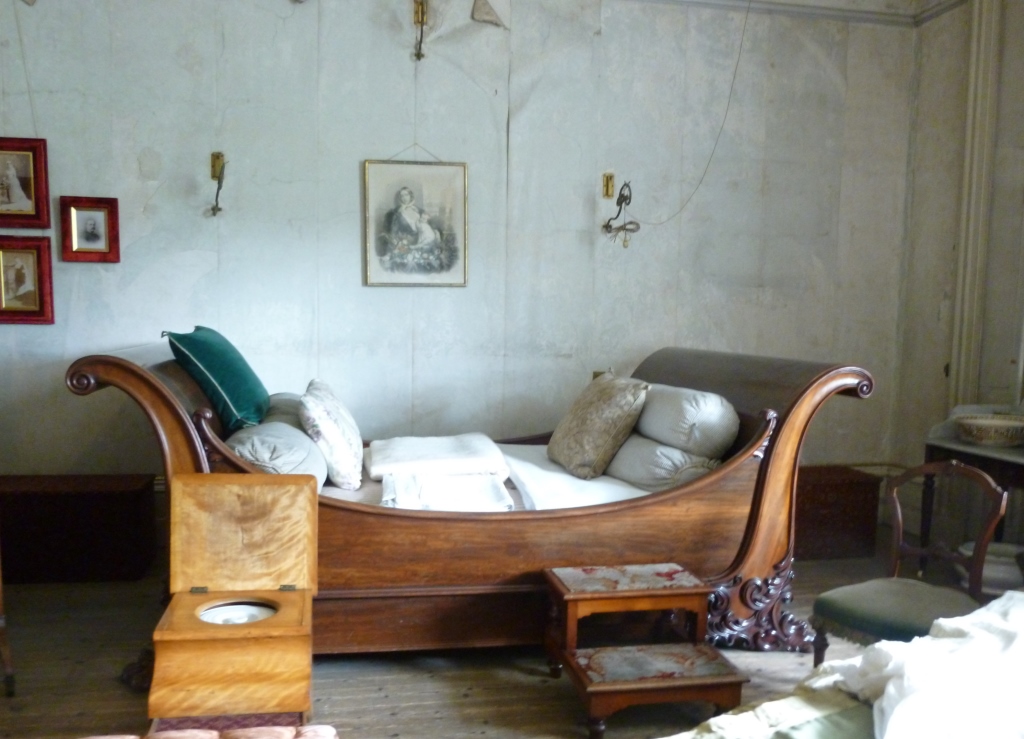
This is one of those properties which have not been refurbished and refurnished with items from elsewhere, but left largely as it was when its last owner, Sylvia Grant-Dalton, died there in 1988. In some ways it reminded me of Erddig, which I visited as a child, with its peeling wallpaper, and, in some areas like the kitchen, a charming unreconstructed mix of old and new. Brodsworth Hall, a grand Victorian family house, was built by Charles Thellusson, and the same family lived there for over 120 years. An earlier house, built in the 17th  century,  had been demolished and the site moved from beside the nearby church of St Michael and All Angels.

One of the guides told me that the Thellussons had come from French Huguenot ancestry, making their fortune in the 18th century originally, from banking, among other things, and sugar plantations in Montserrat. Might the Jamaican mahogany doors on the ground floor, recycled from the old house, have come from another plantation? I wonder how many great English country houses owe their grandeur to wealth partly gained from slave-owning?

It amuses me when people speak reverently of ‘old families’ (like for example the Brudenells, who are said to have been established as aristocrats before the Norman Conquest). Aren’t we all from old families, even if our ancestors haven’t lived in the same house for hundreds of years?

I didn’t have time to see the wonderful formal gardens at Brodsworth, but I was powerless to resist the room full of second-hand books for sale in aid of English Heritage’s work. I was delighted to find two good’uns:

Everyman and Medieval Miracle Plays (particularly welcome as I was so disappointed with the National Theatre’s recent version of Everyman, re-modelled by Carol Ann Duffy, and am keen to read the original), and The Wreck of the Abergavenny - The Wordsworths and Catastrophe by my kinswoman Alethea Hayter*. Sadly I never had the pleasure of meeting her, though her brother Sir William Hayter was my godfather, so I’m very much looking forward to reading it.
 
Amazing what you can find when you’ve got your eyes open!

​*
Obituary of Alethea Hayter 
Click on Family photo under Childhood on this page - Alethea and William Hayter are 2nd and 3rd from the left in the back row

0 Comments

Children's Games

2/4/2016

0 Comments

 
Picture
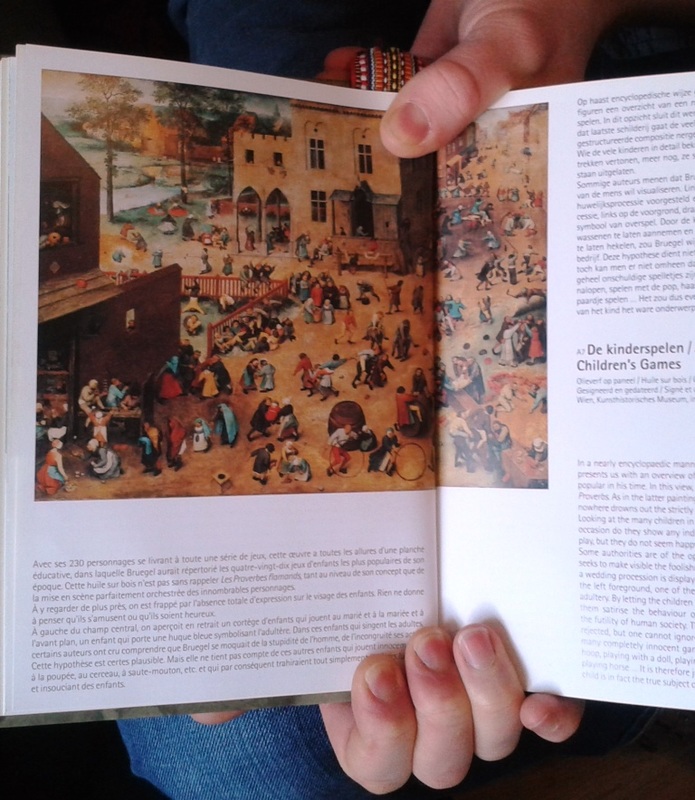
My son is an artist and an art teacher, and one of his favourite artists is Pieter Brueghel  the Elder. We both love the painting entitled Children’s Games, and much enjoy identifying the different activities.

When I worked at a large girls’ school which boasted an excellent library, I was known by the librarians for checking out the weighty tomes which, more often than not, no pupil or indeed teacher had ever borrowed. One such book was the acclaimed study by Iona & Peter Opie, The Lore and Language of Schoolchildren, which took me weeks to plough through, but not without reward!  One of the things that interested me was their conclusion that the learning of  games in the main by-passes adults: it is mostly children who communicate and pass them on to other children.

When I was a girl, it was fashionable to hold seances, and I remember the time I set up a circle of letters round a glass in my older sister’s bedroom (most of the family were out), and I and two cousins began to summon the spirits. As the glass started to move we rose as one and fled screaming from the room! Later in life I met a 1960s alumna of above school who recalled the time when a seance had been organised in one of the dormitories.

“Is there anybody there?” was asked.

At this, the glass began to move, and after affirming that there was, spelt out the word F-I-R-E. Seconds later, the school fire-bell went off, and it transpired that at that moment a fire had been discovered in the Domestic Science block, formerly the great house’s stables. Needless to say, the girls were terrified, and the story spread round the school rapidly. The Bishop of Dover was summoned by the Headmistress and spoke at Assembly the following Sunday on the evils of tampering with the dark arts of the Ungodly.

Reading Pepys’ Diary last night, I was delighted to come across a mention of a lunch-time game we played at Tunbridge Wells Grammar School in the late 1960s/early 1970s, which was clearly being played by children at least 400 years earlier. I recall six of us standing around another girl, who lay on a table in the empty art room. We went round the circle, ceremoniously uttering in turn the words:

“She looks pale.” This was followed, one line at a time, and each reciting by rote, by the following:

“She is pale.”

“She looks ill.”

“She is ill.”

“She looks dead.”

“She is dead.”

And with this, we each slipped one forefinger under the prone girl and, together, lifted her several feet in the air with seemingly no effort at all, as if she was weightless.  We had no idea how it worked, but it did work, and it afforded us great satisfaction!

So when I came across Pepys’ entry for 31 July 1665, I called out to my husband: “Listen to this!” (he had also, I knew, played the game at school):

This evening with Mr Brisband speaking of inchantments and spells, I telling him some of my Charmes, he told me this of his own knowledge at Bourdeaux in France. The words these:

Voicy un Corps mort
Royde comme un Baston
Froid comme Marbre
Leger comme un Esprit
Levons te au nom de Jesus Christ.


He saw four little Girles, very young ones, all kneeling, each of them upon one knee; and one begin the first line, whispering in the care of the next, and the second to the third, and the third to the fourth, and she to the first. Then the first begun the second line, and so round quite through. And putting each one finger only to a boy that lay flat upon his back on the ground, as if he was dead. At the end of the words they did with their four fingers raise this boy as high as they could reach. And he being there and wondering at it (as also being afeared to see it - for they would have had him to have bore a part in saying the words in the room of one of the little girls, that was so young that they could hardly make her learn to repeat the words), did, for fear there might be some sleight used in it by the boy, or that the boy might be light, called the cook of the house, as Sir G. Carteret’s Cooke, who is very big, and they did raise him in just the same manner.
 
Fascinating, eh? Love to hear from any of you with your experiences and stories about children’s games - comments welcome!

0 Comments

A Peep at Pepys

20/3/2016

3 Comments

 
Picture
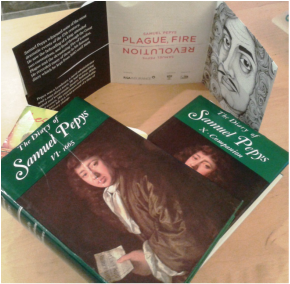
Some years back an elderly lady who was moving into sheltered accommodation made me a present of three lovely gifts: a Himalayan blackberry briar from her garden, a vintage Creda Debonair spin-dryer, and a complete set of the Latham/Matthews version of The Diary of Samuel Pepys in hardback (ten volumes including Companion and Index).

My bedtime routine includes writing a diary, followed by a nightly dip into Mr Pepys’s - I’m currently up to July 1665,with the Plague building to a crescendo.

I’ve a few things in common with Samuel, I find. I hope, for instance, that I might be distantly related to his clerk, Mr Thomas Hayter, whose character, the Companion informs me “seems to declare itself in his neat and regular handwriting”. I lived for some years in both Islington and Hackney,  Pepys’s favourite summer jaunt , and may have cycled past some of his childhood haunts in Kingsland and Newington. We were both born under the sign of Pisces, love London, art, music, reading, and derive great pleasure from the execution of an administrative task well done! Were he alive today, I think Samuel would have been tickled to know that George Frederick Handel, another devoted Londoner, was born on his 52nd birthday. I hope he would also relish, as I do, the sea-stories of Patrick O’Brian featuring Captain Jack Aubrey & Stephen Maturin.

One of my birthday treats this year was a visit to the National Maritime Museum to see their exhibition: Samuel Pepys: Plague, Fire, Revolution. I love the NMM in its beautiful setting, with the Royal Observatory above on the hill. It never fails to touch me when I walk past the model of the Rawalpindi on the way in, and remember the fate of those who died in her in World War 2, including  a man from the town where I live.

I was a little bemused initially by the half-light in the exhibition rooms (emulating 17th century light levels ?), but it was great to see the many artefacts and portraits on display, including the John Hayls portrait of Pepys. I loved the large slipware plate which commemorated the Boscobel oak in which Charles II hid after his defeat at the Battle of Worcester in 1651 (am I mistaken in recalling that the tomb of his companion on that day, Richard Penderel, was located in St Giles’ Churchyard off London’s Denmark Street? Last time I went there I found the lettering so eroded, it could no longer be read).

The engraving of a man being prepared for the surgical removal of a kidney stone was twingingly graphic, the medical instruments displayed even more so! The stark digital presentation of the numbers who died during the time of Plague showed  how shocking the mounting death levels must have been, peaking, in August and September 1665, in  over 7,000 per week in London alone. I was prompted, on my return home, to download the Kindle version of Daniel Defoe’s A Journal of the Plague Year for further reading!

Pepys’ diary, together with documenting the great dramas of life, recording historic events and encounters with the great and the good, also brings home the truth that people from earlier centuries shared similar concerns with our own: worries about job prospects, upsetting the boss, financial insecurity, family squabbles, aging parents, marital tiffs, overspending, aches and pains, and (for we churchgoers) the occasional boring sermon, etc! There was a reproduction in the exhibition of a large group portrait showing a visit to Christ’s Hospital of the King and courtiers, with Pepys (a Governor of the School) perusing a map. It included  some charming detail depicting schoolchildren doing the things children  do - and being ticked off in the same way they presumably have been since time immemorial!

Pepys dearly loved having family and friends over for a meal and a good time, and the day after our visit we enjoyed a jolly get-together. We were very merry, in true Pepys fashion, and, amazingly in this smartphone age, we realised, once everyone had gone, that no-one had taken the now almost obligatory photo for Facebook, so only fond memories and my diary must stand as a record of the occasion. I feel glad for that too!

The exhibition has left me determined to take a trip some time to Magdalene College, Cambridge to see Pepys’s library, and another to the Historic Dockyard at Chatham. In the meantime, for those of you who might like to see the Exhibition at Greenwich, it closes at the end of this week on 28 March - so hurry if you want to catch it!

3 Comments
<<Previous
Forward>>
    Picture

    Author

    Lifelong bookworm, love writing too. Have been a theatrical agent and reflexologist among other things, attitude to life summed up by Walt Whitman's MIRACLES.

    If you would like to subscribe to my blog, please click on RSS Feed link below:

    RSS Feed

    Categories

    All
    Arts
    Books
    Family Matters
    History
    Miscellaneous
    My Fantastic Five
    Natural World
    People
    Running & Walking
    Travel

    Archives

    November 2021
    February 2021
    June 2020
    May 2020
    April 2020
    November 2019
    April 2019
    March 2019
    February 2019
    January 2019
    December 2018
    November 2018
    October 2018
    June 2018
    March 2018
    June 2017
    May 2017
    March 2017
    February 2017
    December 2016
    November 2016
    October 2016
    September 2016
    August 2016
    June 2016
    May 2016
    April 2016
    March 2016
    February 2016
    January 2016
    November 2015
    October 2015
    September 2015
    August 2015
    July 2015
    June 2015
    May 2015
    April 2015
    March 2015
    February 2015
    January 2015
    December 2014
    November 2014
    October 2014
    September 2014
    August 2014
    July 2014
    June 2014
    May 2014
    April 2014
    March 2014
    February 2014
    January 2014
    December 2013
    November 2013
    October 2013
    September 2013
    August 2013
    July 2013
    June 2013
    May 2013
    April 2013
    March 2013
    February 2013
    January 2013
    December 2012
    November 2012
    October 2012
    September 2012
    August 2012
    July 2012
    June 2012
    May 2012
    April 2012
    March 2012
    February 2012
    January 2012
    October 2011
    September 2011
    August 2011
    April 2011
    March 2011
    February 2011
    January 2011
    October 2010
    April 2010
    January 2010
    December 2009
    September 2009
    July 2009
    February 2009
    January 2009

    RSS Feed

Powered by Create your own unique website with customizable templates.